
Start here, every time
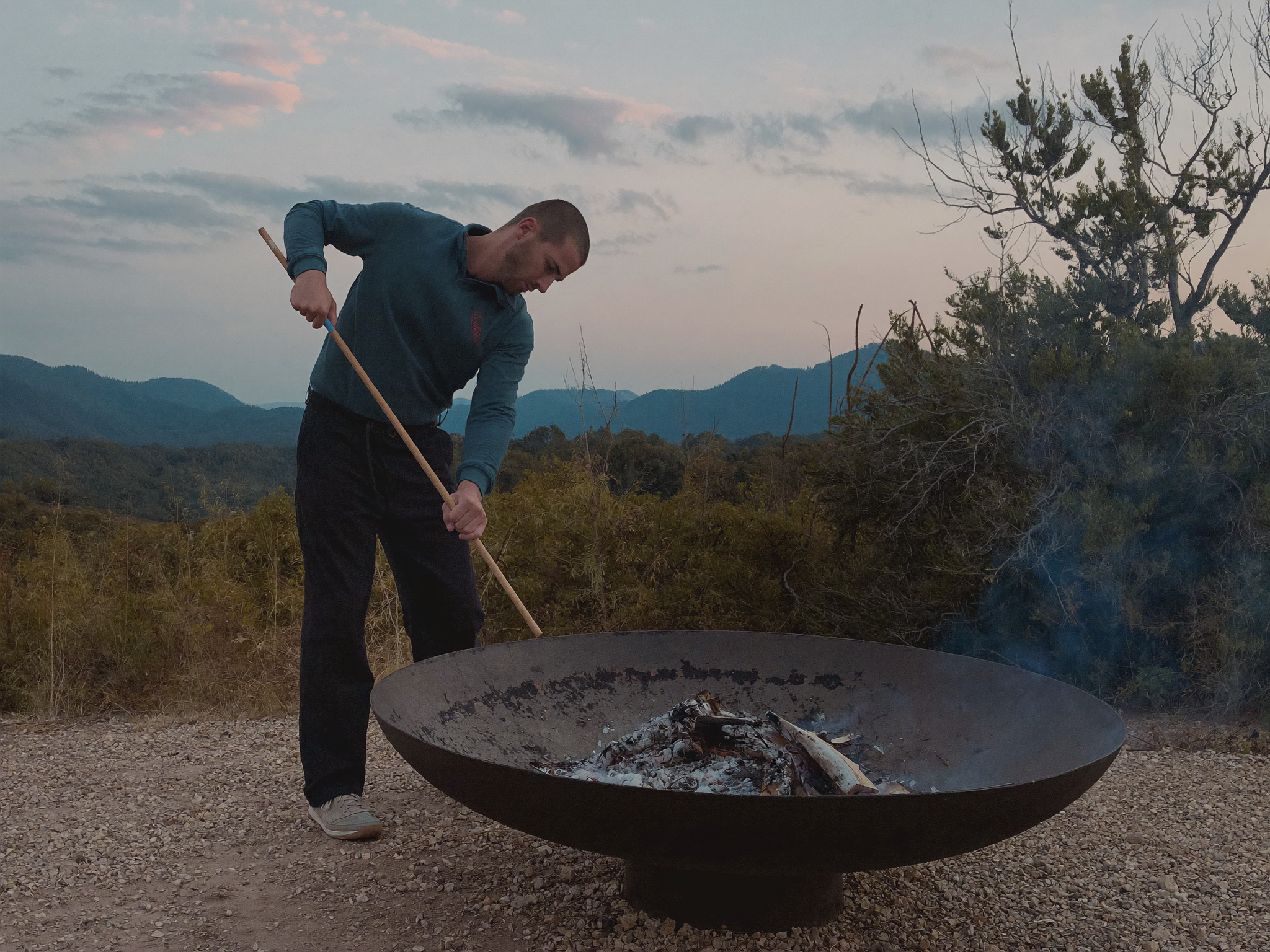
Before touching the specific material below, every fire pit gets the same first pass. Wait until the fire has been fully out and cold for at least 24 hours, since ash holds heat far longer than it looks like it does. Scoop loose ash into a metal container, never plastic or paper, and let it sit somewhere non-combustible for a few more days before disposal.
Why the wait matters
Ash acts as an insulating blanket around buried coals, so a pit that looks cold on the surface can still be hiding embers well below. Fire safety officials have traced house fires directly back to ash that was bagged and stored too soon, sometimes days after the last flame. Store cooled ash in a metal container with a tight lid, kept away from the house, siding, and anything that can burn.
See our ash disposal guide for safe disposal and garden reuse in detail.
Cleaning checklist
Check items off as you go. Progress is saved in this browser, so the list is ready again the next time this page is open.
Fire pit cleanup, start to finish
The chemistry behind why materials fail differently
Bare steel rusts because iron reacts directly with oxygen and moisture, with nothing standing in the way. Stainless steel resists that same reaction because its chromium content reacts with oxygen first, forming an ultra thin, transparent chromium oxide layer on the surface. That passive layer is dense enough to block moisture and oxygen from ever reaching the iron underneath, and research on stainless steel corrosion behavior published through the National Institutes of Health describes this layer as self repairing when it's undamaged, since chromium in the surrounding metal migrates in to reseal small scratches on its own.
That self healing only works if the layer isn't being fought against. Steel wool, abrasive pads, and chloride heavy cleaners can grind through or chemically damage the passive layer faster than it can rebuild, which is exactly why those products turn a self protecting surface into one that pits and stains. Mild soap and a soft cloth clean the surface without ever touching that protective chemistry.
Cast iron has no such shield. It relies on a seasoning layer, a thin coat of baked-on oil, standing between bare iron and the air. Water strips that layer fast, which is why cast iron rusts within hours of being left wet while stainless steel can shrug off the same splash.
Pick your fire pit material
Painted or powder coated steel
- Remove all ash and let the bowl cool completely.
- Wipe with a soft cloth and warm water mixed with a small amount of mild dish soap.
- Rinse with a damp cloth, then dry immediately with a towel. Standing water is what starts rust once the coating has even a small chip.
- Touch up any exposed bare metal with a high heat rated spray paint made for grills or fire pits before it has a chance to rust further.
Stainless steel
- Remove ash and let the unit cool fully.
- Wash with warm water and mild dish soap using a soft sponge, always wiping in the direction of the brushed grain if there is one.
- For heat discoloration, a stainless steel cleaner or a paste of baking soda and water buffed gently with a soft cloth restores most of the shine. This discoloration is cosmetic, not a sign of damage.
- Dry completely with a microfiber cloth to avoid water spots.
Cast iron
- Remove ash while it's still slightly warm, which loosens more of it than scraping cold ash.
- Brush loose debris with a stiff bristle brush rather than soap and water when possible, since cast iron rusts fast once wet.
- If it does need washing, dry it immediately and completely with a towel, then apply a light coat of high heat cooking oil while it's still slightly warm to reseason the surface.
- Store under a cover, ideally somewhere the surface never sits in standing rain.
Copper
- Remove ash and let the bowl cool.
- Wash with warm soapy water and a soft cloth for routine cleaning.
- To remove the greenish patina and restore shine, a paste of equal parts salt, flour, and vinegar or lemon juice, left on for about ten minutes and rinsed off, works on most copper.
- Dry fully and apply a thin coat of copper sealant or wax if a bright, unweathered look is the goal. Skip this step entirely if the patina look is what you actually want, since many people buy copper specifically for that aging effect.
Fire glass and lava rock
- Remove the media from the pit in batches rather than all at once.
- Rinse each batch in a mesh strainer or colander under warm running water, swishing gently to knock loose soot and dust.
- For heavier residue, a mild dish soap solution followed by a thorough rinse works, especially on lava rock, which is porous and holds onto oils longer than glass.
- Spread the media on a towel and let it air dry completely before returning it to the pit. Wet media placed back over a burner risks trapped moisture cracking under heat.
How often, realistically
| Task | Frequency |
|---|---|
| Scoop loose ash | After every few burns, once it's fully cold |
| Wipe down exterior | Monthly during regular use |
| Rinse glass or lava rock media | Every 2 to 3 months, or sooner if visibly sooty |
| Full deep clean and rust inspection | Start and end of the season |
How fast each material gets into trouble if neglected
These are relative maintenance-risk comparisons based on how each material behaves without regular care, not a lab measured corrosion rate. Stainless steel's chromium oxide layer and fire glass's non-metallic composition are why both sit far below bare steel and unseasoned cast iron.
Frequently asked questions
How often should you clean a fire pit?
Scoop cold ash out after every few burns, and do a full wipe down and inspection once a month during the season. A deep clean at the start and end of the season catches rust or damage before it spreads.
Can you use soap and water on a fire pit?
Yes, on bare steel, stainless steel, and cast iron. Mild dish soap and warm water handle most residue. Avoid letting cast iron soak, since standing water is what causes it to rust.
How do you clean fire glass without breaking it?
Rinse it in a mesh strainer or colander with warm water, working in small batches, then let it air dry completely before returning it to the pit. Avoid scrubbing pieces against each other hard enough to chip the edges.
What should you never use to clean a fire pit?
Skip steel wool and harsh abrasive pads on stainless steel, since they can scratch the surface and create spots where rust starts. Avoid oven cleaner and other strong chemical degreasers on painted or powder coated steel, which can strip the finish.
How long does fire pit ash actually stay hot?
Longer than it looks. Ash insulates buried coals, and fire safety agencies have traced house fires back to ash that was bagged and stored too soon, sometimes days after the last visible flame. A full week of cooling in a covered metal container is the safest standard before disposal.
Why is stainless steel more rust resistant than regular steel?
Stainless steel contains chromium, which reacts with oxygen to form a thin, self healing oxide layer on the surface. That layer blocks moisture and oxygen from reaching the iron underneath, which is why scratching or chemically damaging that layer with steel wool or harsh cleaners makes the surface far more likely to actually corrode.
Sources
- US Consumer Product Safety Commission, Fireplace Safety Tips, on keeping ash and embers contained until fully cool.
- Loudoun County, Virginia, Fire and Rescue Fire Marshal's Office, on how improperly discarded hot ash and embers cause house fires.
- National Institutes of Health, National Library of Medicine, on the chemistry of the passive chromium oxide layer that gives stainless steel its corrosion resistance.