The short version
- Smokeless does not mean smoke free. It means dramatically reduced smoke during the sustained part of the burn.
- The heat difference is real, not just marketing. Secondary combustion recovers energy an open bowl wastes.
- The price gap is genuine, typically two to four times an equivalent open bowl.
- Cleanup is where smokeless pits quietly win, thanks to removable ash pans most open bowls do not have.
- An open bowl is not a worse fire, it is a different trade off, and it is the right one for plenty of buyers.
This comparison gets treated online as if smokeless pits are simply the upgraded version of an open bowl, the way a nicer grill is an upgrade from a cheaper one. That framing is not quite right. A smokeless pit changes the actual character of the fire, less visible flame theater, more contained burn, and that is a genuine trade off some buyers will not want, not just a strictly better product at a higher price.
Section oneSmoke, honestly
This is the entire reason the category exists, so it is worth being precise about what actually changes.
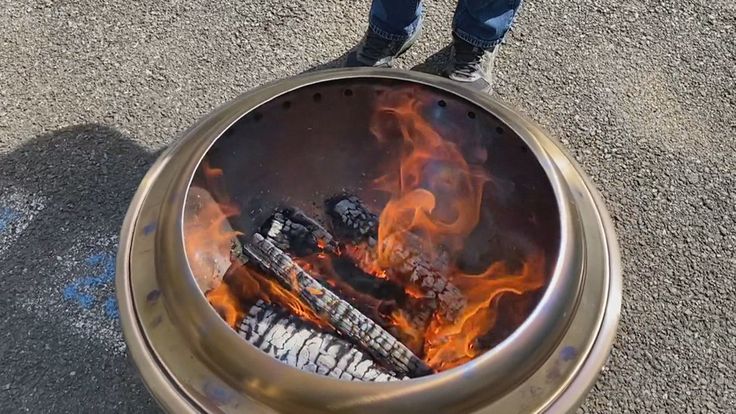
An open bowl fire pit performs one burn. Some of the wood's volatile gases escape unburned as visible smoke, which is fuel you paid for and never got heat from. A double wall smokeless pit adds a second burn: preheated air injected through jets near the rim reignites that rising smoke before it escapes. The mechanism is real and it works, covered in full in our how smokeless pits work guide.
What it does not do is eliminate smoke entirely. Every smokeless pit smokes at startup, while the walls are still cold, and again at burnout, as the fire dies down and the wall cavity cools. The reduction is real and noticeable during the sustained middle of a burn, which for a typical two to three hour evening is most of the fire, but "smokeless" as a literal claim does not survive contact with how the physics actually works.
Open bowl
Regular fire pit
- Smokes throughout the burn, intensity varies with wind and wood quality
- No engineered airflow to reburn escaping gas
- Smoke direction shifts constantly with wind
Double wall
Smokeless fire pit
- Smokes at startup and burnout, minimal during sustained burn
- Secondary combustion reburns most rising smoke
- Still affected by wind and wet wood, just less severely
Section twoHeat output and wood use
The upgrade is not purely about smoke. It changes how much heat you get from a given amount of wood.
Reigniting smoke does not just remove it from the air, it converts fuel that would have escaped unused into additional flame and heat. That is why smokeless pits commonly run noticeably hotter than an open bowl burning a comparable wood load. The practical effect is a warmer fire per log rather than necessarily a lower total wood bill, since people tend to feed a hotter fire more generously rather than banking the savings.
Wood quality matters more in a smokeless pit
Secondary combustion has a limited capacity: it can reburn a normal volume of smoke, but wet or unseasoned wood produces more vapor than the system is designed to reignite, and the smoke advantage disappears. An open bowl is more forgiving of imperfect wood, since it was never promising a clean burn in the first place. Details on moisture targets are in our firewood guide.
Section threePrice, weight, and cleanup
The parts of this decision that have nothing to do with smoke.
| Factor | Open bowl | Smokeless double wall |
|---|---|---|
| Typical price | Lower, often under $300 | Higher, commonly $200 to $600+ |
| Ash pan | Rare | Common on mid to premium models |
| Weight | Often lighter, single wall | Varies, double wall adds material |
| Flame visibility | Open, unobstructed view | Contained within the walls |
| Startup speed | Immediate, no warm up phase | A few minutes before secondary burn kicks in |
The ash pan is an underrated part of this decision. Cleaning an open bowl without one means tipping a heavy, ash filled cylinder or going in with a shovel and a shop vacuum. A removable pan turns that into a lift and dump. For anyone who uses a fire pit often, that convenience compounds over a season in a way the sticker price does not capture.
DecisionWhich one should you actually buy
Two honest paths, not one universal answer
Buy smokeless if
- You sit close to the fire, within a few feet, for extended periods
- Neighbors or a small patio mean smoke drift is a real problem
- You want the removable ash pan convenience
- You are willing to burn genuinely dry wood to get the benefit
An open bowl is smarter if
- The fire sits well away from seating and neighbors
- Budget is the primary constraint
- You value the traditional look of an open, visible flame
- You will not consistently source or season dry wood
Neither is the objectively correct fire pit. They solve different problems, and the smokeless premium is money well spent for exactly the buyers described above, and money spent on a feature that will not matter much for everyone else. Our full comparison of specific models is in the best smokeless fire pits guide.
Keep readingRelated guides
QuestionsFrequently asked
Is a smokeless fire pit worth the extra money?
It depends on how close you sit to your neighbors and how much the smoke actually bothers you. A smokeless pit costs roughly two to four times an equivalent open bowl. In exchange, you get noticeably less smoke during the sustained part of the burn, a hotter fire from the same amount of wood, and usually a removable ash pan. On a large property with seating spread far apart, an open bowl is often good enough.
Does a smokeless fire pit use more or less wood?
Less, for the same amount of heat. Secondary combustion reignites gases an open bowl would waste as smoke, which means more of the energy in each log converts to usable heat rather than escaping unburned. In practice this shows up as a hotter fire from a comparable wood load, not necessarily less wood used per hour of sitting by the fire.
Is an open fire pit good enough for most people?
For plenty of buyers, yes. If the fire pit sits well away from neighbors and seating, and cost matters more than smoke reduction, an open bowl delivers a genuine wood fire at a fraction of the price. The smokeless premium buys comfort and convenience, not a fundamentally different fire.