- Home
- Fire glass vs lava rock
Fire pit comparison
Fire glass vs lava rock
Both sit over a gas burner and do the same basic job. The differences are in look, cost, and how each one ages, not in how hot the fire actually gets.
The direct answer
Fire glass gives a brighter, reflective look and never breaks down, but costs more. Lava rock is cheaper and hides burner discoloration better over time, with a more traditional appearance. Neither changes the fire pit's actual heat output, that is set entirely by the burner.
The short version
- Both materials are safe and functionally interchangeable in a properly sized gas fire pit.
- Fire glass costs more per bag, roughly two to three times lava rock by volume.
- Lava rock ages less gracefully, showing heat discoloration sooner than glass.
- Depth matters more than material. Follow the manufacturer's specified fill depth for your burner.
- They can be combined, lava rock as a base with glass layered on top.
This choice comes up on almost every gas fire pit and fire table, and most buyers treat it as purely aesthetic. It mostly is. Neither material changes the BTU rating of the burner underneath it, and both are rated safe for direct flame contact when sized correctly. The real differences are in appearance, price, and how each one looks after two or three seasons of use.
Section oneAppearance and light
This is usually the deciding factor, and it comes down to how each material interacts with the flame.
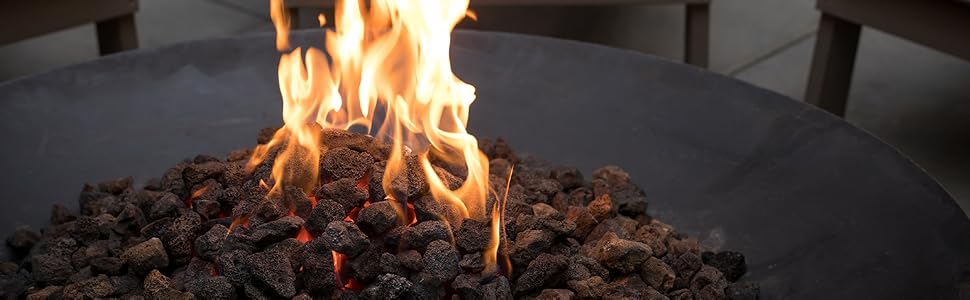
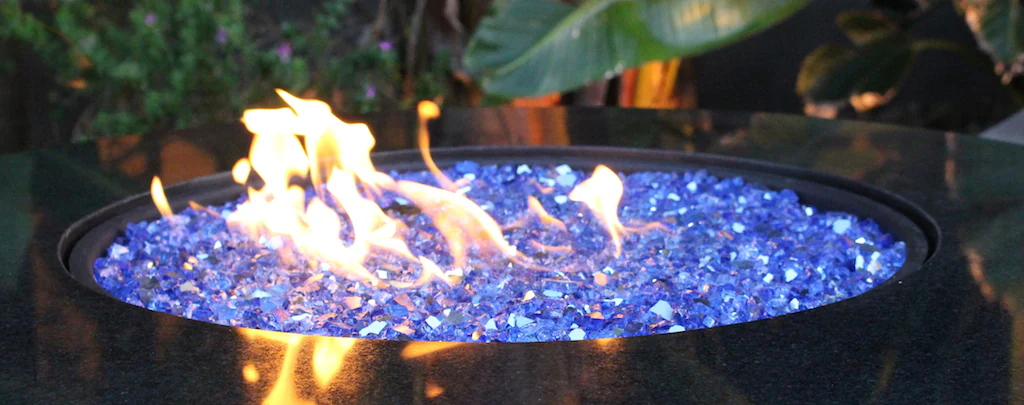
Reflective, contemporary
Fire glass
- Tempered glass pieces reflect and refract light, creating visible sparkle
- Available in a wide range of colors, from clear to bold tones
- Reads as modern and polished, common in higher end fire tables
Natural, traditional
Lava rock
- Porous, matte volcanic rock in earth tones, mostly gray, red, or black
- Reads as closer to a natural wood fire's texture and coloring
- Common on classic and rustic style fire pit designs
Section twoDoes either one change the heat
A common assumption, and not accurate.
Heat output is set entirely by the burner's BTU rating, not by what sits on top of it. Both materials absorb and radiate some stored heat once warmed through, which adds a marginal amount of ambient warmth around the fire pit, but neither one increases or decreases the burner's actual output. If you are trying to size heat for your space, that decision happens at the burner and fuel level, covered in our BTU guide, not at the media layer.
Section threeHow each one ages
This is where the real practical difference shows up, usually around year two or three.
| Factor | Fire glass | Lava rock |
|---|---|---|
| Cost per bag | Higher, often $30 to $60 per 10 lb | Lower, a fraction of glass by volume |
| Breaks down over time | No, effectively permanent | Slowly, can crumble after years |
| Heat discoloration | Can show soot staining | Hides discoloration better |
| Cleaning | Rinse to restore shine | Low maintenance, natural look tolerates soot |
| Replacement frequency | Rarely needed | Occasional, as pieces break down |
Fire glass essentially lasts the lifetime of the fire pit, since tempered glass does not degrade from heat cycling the way porous stone can. What it does need is an occasional rinse, since soot and ash settle into the reflective surface and dull the sparkle over a season. Lava rock hides that same soot far more naturally thanks to its matte, porous texture, which is part of why it remains the lower maintenance choice for anyone who does not want to think about the media at all.
Section fourHow much you actually need
Depth is the spec that matters more than which material you pick.
Manufacturers specify a target fill depth for a reason: too little media exposes the burner and looks unfinished, while too much can smother the flame and cause uneven burning or sooting. As a general guide, fire glass is commonly filled to 2 to 3 inches over the burner pan, while lava rock, being lighter and more porous, often runs 3 to 4 inches. Always defer to the specific depth listed in your fire pit's manual over a general rule, since burner design varies.
Sizing matters for propane and nozzle burners
Fire glass used with a drilled port or nozzle style propane burner commonly needs to be a specific piece size, often three quarter inch, to avoid blocking gas flow through individual ports. Check your burner type against the media size the manufacturer recommends before buying in bulk.
Can you combine them
Yes. A common approach layers lava rock as an inexpensive base fill with a top layer of fire glass for the visual effect, which stretches the more expensive material further while still delivering the reflective look where it is visible. Both are safe together as long as the combined depth matches the manufacturer's specification.
Keep readingRelated guides
QuestionsFrequently asked
Is fire glass or lava rock better for a fire pit?
Neither is objectively better, they serve the same function differently. Fire glass reflects light and gives a brighter, more contemporary look, and it does not break down over time. Lava rock costs less, hides burner discoloration better as it ages, and gives a more traditional appearance. Both are safe and functionally interchangeable in a properly sized gas fire pit.
Does fire glass or lava rock affect how hot a fire pit burns?
Not meaningfully. BTU output is determined by the burner, not the media sitting on top of it. Both materials radiate stored heat once warmed, which adds a small amount of ambient warmth, but neither one changes the fire pit's rated heat output.
How much fire glass or lava rock do I need?
Manufacturers typically specify a target depth, commonly 2 to 3 inches for fire glass or 3 to 4 inches for lava rock, measured across the burner pan. Follow the specific depth in your fire pit's manual, since too little media can expose the burner and too much can smother it.
Can you mix fire glass and lava rock?
Yes, some owners layer lava rock as a base with fire glass on top for a blended look and to stretch the amount of glass needed, which is more expensive by volume. Both materials are safe together as long as the combined depth matches the manufacturer's specification and does not smother the burner ports.