
The short version
- Gas and propane beat wood burning on a deck, since they throw no sparks or embers, the leading cause of deck fires.
- A heat shield is not optional, on wood or composite, regardless of fuel type.
- A thin mat is often not enough. Effective protection needs an actual thermal barrier and airflow underneath it.
- Clearance rules still apply on a deck. ANSI Z21.97 commonly requires 24 inches lateral clearance from combustible material.
- Check local code and HOA rules separately. A CSA certified unit does not override either one.
This question comes up more than almost any other fire pit safety topic, because decks are exactly where people want a fire pit and exactly where the risk is highest. Wood decking and composite decking both fail differently under sustained heat, and the fire pit itself does not need to touch the boards to cause damage. Radiant heat alone is enough.
Section oneFuel type is the first decision
Not all fire pits are equally deck compatible, and the difference is not subtle.
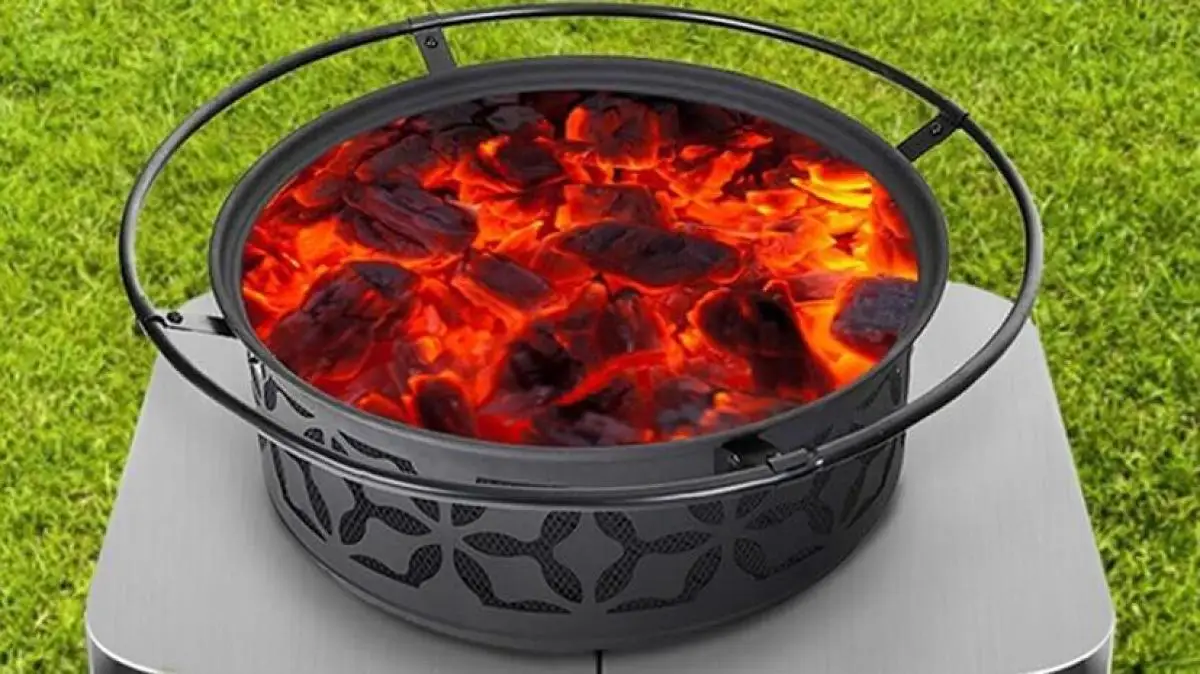
Deck safer choice
Gas or propane
- Throws no sparks or embers, the leading cause of deck fires
- Flame is contained and directed upward, not outward
- Still radiates significant downward heat and needs a shield
- Look for CSA or ANSI Z21.97 certification specific to the model
Higher risk on a deck
Wood burning
- Sparks and embers land on boards, a thousand seams to drop into
- Requires manufacturer approval for deck use, if it exists at all
- Needs a non combustible base extending well beyond the pit itself
- Many local codes restrict wood burning devices on decks outright
Neither fuel type gets to skip a heat shield. The distinction is about spark and ember risk, not radiant heat, and radiant heat is a problem for gas fire pits too. A gas flame throws no embers, which removes the single biggest cause of deck fires, but the bowl underneath still gets hot enough to damage decking without one.
Section twoHow hot the underside actually gets
This is the number that makes the case for a heat shield on its own.
Reference
Fire pit heat versus deck material tolerance
Radiant heat range and decking thresholds reflect figures reported by This Old House and deck heat shield manufacturers. The overlap between a fire pit's radiant output and composite decking's failure point is the entire argument for a rated heat shield, not a thin mat.
The overlap is the whole story. A fire pit does not need to touch a deck, or even come close to its own 800 degree flame temperature, to soften or melt composite boards. Radiant heat pushed downward from the bowl, commonly 200 to 400 degrees, sits squarely inside the range where composite decking starts to fail. Wood decking fares somewhat better against radiant heat alone but remains highly vulnerable to sparks and embers from a wood burning fire.
Section threeWhat a heat shield actually needs to do
Not every product marketed as deck protection does this job well.
| Feature | Why it matters |
|---|---|
| Actual thermal barrier material | A rated insulating layer, not just a decorative rubber or fabric mat, is what blocks radiant heat |
| Air gap underneath | Elevated feet let heat dissipate rather than trap it, and prevent moisture buildup that can stain or rot decking |
| Sized to the full footprint | Coverage needs to extend under all legs and the full base, not just the center of the bowl |
| Rated for the fuel type in use | Some pads are rated only for propane or gas and not for the higher, longer duration heat of a wood fire |
A documented failure mode
A thin mat that sits flush against the boards without an air gap can trap heat and moisture against the deck rather than shedding it, which has caused smoldering in documented cases even with a shield technically in place. The air gap is not a minor feature, it is part of how effective protection actually works.
Inspect after every use, not just before buying
Even a properly rated shield deserves a periodic check. Look for discoloration, warping, or heat damage at the edges of the pad's footprint after use, particularly on composite decking under a wood burning fire, where sustained heat exposure is highest. Catching early discoloration is far easier to fix than replacing warped boards.
Section fourClearance still applies on a deck
A heat shield solves the surface underneath. It does not solve distance from walls, railings, or anything overhead.
The ANSI Z21.97 and CSA 2.41 standard for outdoor gas appliances commonly requires a minimum of 24 inches of lateral clearance from combustible material, with overhead clearance depending on the specific burner, frequently 7 feet or more to a combustible structure above. These figures vary by model and manufacturer, so the certification documentation for a specific fire pit is the authoritative source, not a general rule of thumb.
A deck railing, house wall, and any overhead pergola or roofline all count as combustible material for this purpose. A heat shield under the pit does nothing to satisfy the lateral or overhead distance requirements, which is a separate rule entirely. Full clearance detail, including the difference between a portable outdoor fireplace and other fire categories, is in our fire pit safety and clearance guide.
Before you buy anythingQuick checklist
Keep readingRelated guides
QuestionsFrequently asked
Can you put a fire pit on a wood deck?
Only with a gas or propane unit rated for the purpose, a fire rated heat shield underneath, and confirmation that local code and any homeowners association allow it. A wood burning fire pit on a bare wood deck is a different risk category entirely, since it throws sparks and embers that a contained gas flame does not, and many local codes restrict wood burning devices on combustible decking regardless of shielding.
How hot does the underside of a fire pit get?
A metal fire pit bowl can reach roughly 800 degrees Fahrenheit at the flame, and can push 200 to 400 degrees of radiant heat downward onto the surface underneath. Composite decking softens starting around 176 degrees and can melt between 250 and 350 degrees, which is well within the range an unshielded fire pit can produce.
Is a fire pit mat enough to protect a deck?
A thin mat alone is often not enough. Effective protection blocks radiant heat with an actual thermal barrier and typically includes an air gap to let heat dissipate rather than trap it against the deck surface. A pad that sits flush against the boards without airflow can trap heat and moisture, which has caused smoldering in some documented cases even with a shield in place.
What clearance does a fire pit need on a deck?
The ANSI Z21.97 and CSA 2.41 standard for outdoor gas appliances commonly requires at least 24 inches of lateral clearance from combustible material, with overhead clearance depending on the specific burner system, often 7 feet or more to a combustible overhead structure. These are baseline figures; always confirm the specific clearance for a given model against its manufacturer documentation and local code.
Editorial note
This page provides general safety education, not a substitute for manufacturer documentation, local fire code, or a homeowners association's specific rules. Confirm requirements for your exact fire pit model and address before placing it on a deck. Read our editorial policy for more.