The short version
- Build top down, not bottom up. Tinder and kindling go on top of the stack, not underneath a pile of heavy logs.
- Skip the lighter fluid entirely. Dry tinder and a single match do the job without the hazard, and most failed fires are a moisture problem, not an ignition problem.
- Airflow matters as much as fuel. A tightly packed stack smothers itself. Gaps between logs are not wasted space, they are how the fire breathes.
- A fire that will not stay lit is almost always wet wood. Below 20 percent moisture content is the target, and a cheap meter answers the question in seconds.
- Top down heats a smokeless pit's walls faster too. The same method that makes an open bowl easier to light also shortens the smoky startup phase on a double wall pit.
Most people learn to build a fire the way summer camp taught them: a teepee or a log cabin, tinder underneath, lit from the bottom, and then a lot of blowing, poking, and adding more kindling when it inevitably struggles. That method works eventually. It is just slower, smokier, and more failure prone than it needs to be, especially in a fire pit where you are usually starting from cold steel rather than a bed of existing coals.
The top down method flips the order. Once you build one fire this way, it is difficult to go back to the old method.
Section oneThe top down method
Build it once, in this order, and light it exactly once from the top.
Signature diagram
The stack, bottom to top
Why this order works
Fire needs fuel, heat, and oxygen, and the top down stack gives it all three in the right sequence without help. The tinder ignites instantly and drops burning material straight down onto the kindling, which is already positioned to catch it. The kindling burns into the medium wood, and the medium wood eventually ignites the base logs, all without you needing to add anything or rearrange the pile mid burn.
The gaps between pieces at every layer are intentional. A fire that cannot pull in air from below suffocates itself no matter how dry the wood is.
This same top down build is what our smokeless fire pit guide recommends for double wall pits specifically, since it heats the inner wall faster and shortens the smoky startup phase before secondary combustion kicks in.
Method
Step by step
- Lay the base logsPlace your largest, driest split logs flat on the bottom, side by side, leaving small gaps between them.
- Add a middle layerStack medium sized split wood crosswise on top of the base layer, again leaving gaps for airflow.
- Stack kindling on topAdd a loose layer of finger sized dry kindling, arranged so air can still move through the whole stack.
- Top with tinderPlace a small, loose nest of dry tinder on the very top, whether that is fatwood shavings, dry bark, or a natural fire starter.
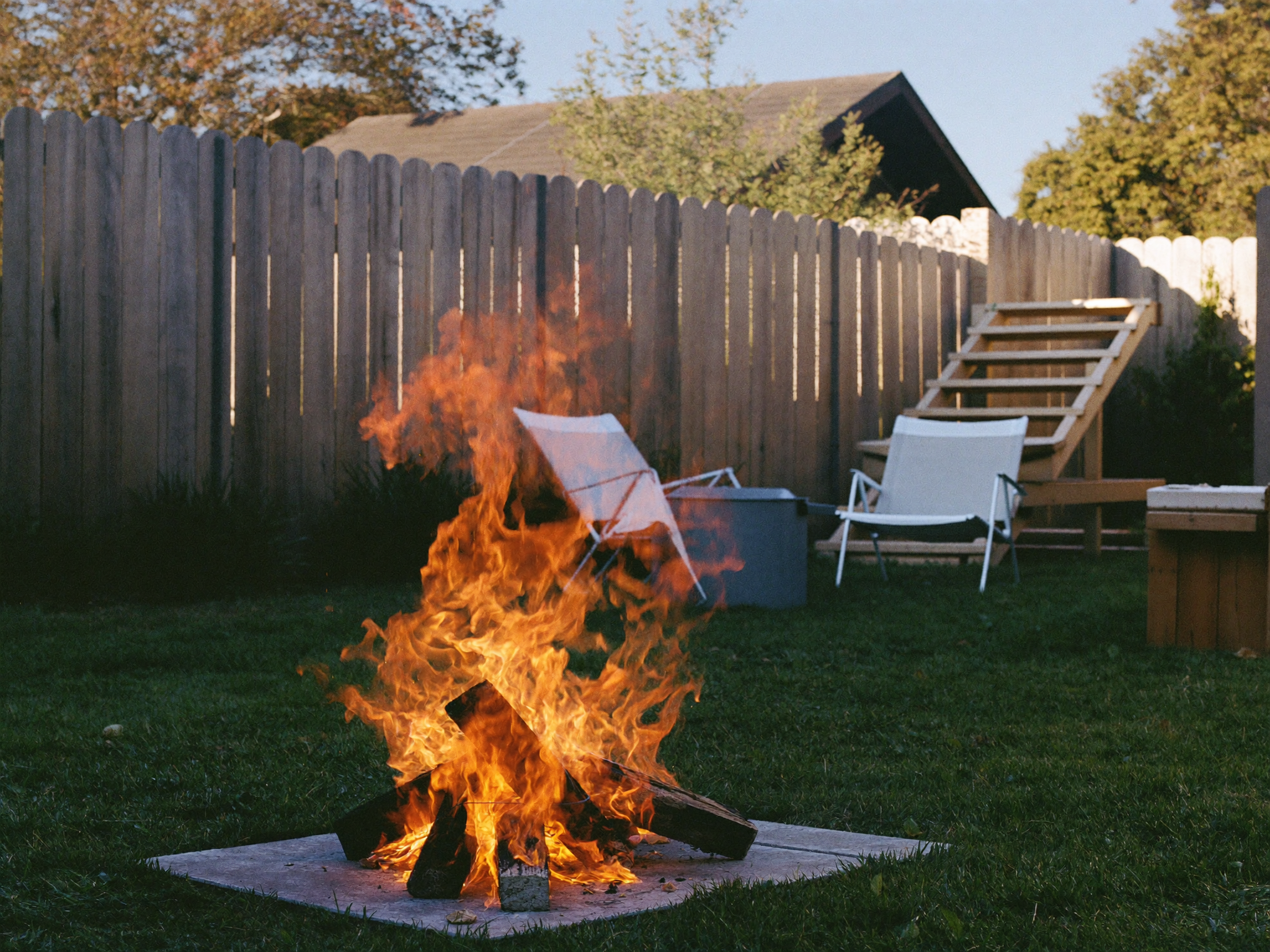
- Light from the top, onceLight the tinder. Do not relight from the bottom or add more fuel immediately. Let the fire establish and burn downward on its own for the first several minutes.
Section twoWhat to actually use for tinder and kindling
The material at the top of the stack decides whether this works on the first match or the fifth.
| Material | Reliability | Notes |
|---|---|---|
| Fatwood shavings | Excellent | Resin rich softwood, lights even when slightly damp, widely sold in small bundles |
| Natural fire starter cubes | Excellent | Wood fiber and wax, no petroleum smell, burns long enough to catch kindling reliably |
| Dry pine needles or bark | Good, if dry | Free and effective, but only when genuinely dry, damp needles smolder instead of catching |
| Newspaper, loosely balled | Good | Burns fast and can burn out before kindling catches if the kindling is too thick |
| Cotton balls with petroleum jelly | Excellent | Burns for several minutes, a classic reliable option, easy to make ahead of time |
| Charcoal or lighter fluid | Avoid | Unnecessary hazard, uneven burn, and a genuine safety risk covered below |
Kindling is the bridge between tinder and your actual logs, and it is the layer people most often get wrong by skipping it or making it too thick. Finger width, dry, and split rather than round, is the target. If a piece of kindling is thicker than your thumb, it belongs in the middle layer with the rest of the medium wood, not in the kindling layer.
Section threeWhy lighter fluid is not the answer
It feels like the fast option. It is actually the one most likely to end an evening in a burn unit.
Never use liquid accelerants
Lighter fluid, gasoline, and similar liquid accelerants create vapor that can ignite explosively rather than burning in a controlled way, especially if poured onto material that already has any flame or heat in it. This is a genuine, well documented cause of serious burn injuries around fire pits and grills, not an exaggerated caution.
Dry, properly seasoned wood with real tinder does not need an accelerant to light. If a fire will not start without lighter fluid, the actual problem is almost always wet wood or poor airflow in the stack, not a lack of accelerant. Fixing the real cause is both safer and more effective.
The Environmental Protection Agency's wood burning guidance reinforces the same underlying point from a different angle: firewood below 20 percent moisture content, seasoned roughly six months for softwood and at least a year for hardwood, burns cleaner and more reliably than wood that still holds water. Dry wood is not just a smoke reduction tactic, it is the actual fix for a fire that struggles to start in the first place. More detail on picking and seasoning wood is in our firewood guide.
Section fourFixing a fire that will not stay lit
Almost every stubborn fire traces back to one of three causes.
It catches, then dies
This is usually an airflow problem. The stack is packed too tightly for oxygen to reach the burning material, or the kindling layer is too thick to fully ignite before the tinder burns out underneath it. Rebuild with more deliberate gaps between pieces, and use thinner kindling than you think you need.
It smokes heavily and will not really flame
This is almost always wet or unseasoned wood. Green wood spends its early heat boiling off internal moisture instead of burning, which is exactly why it smokes and hisses rather than catching properly. A moisture meter answers the question in seconds, and the fix is switching to genuinely dry, seasoned wood rather than fighting the fire you have.
It lights but stays small
Give it time before adding fuel. A common mistake is smothering a young flame with too much wood too early, which is the same airflow problem in a different form. Let the kindling layer fully establish before the base logs are expected to carry the fire on their own.
Section fiveFrequently asked questions
What is the easiest way to start a fire in a fire pit?
The top down method. Stack your largest logs on the bottom, a layer of medium wood on top of that, kindling above that, and a small nest of tinder on the very top. Light the tinder at the top and the fire burns downward on its own, which needs far less tending than lighting from the bottom and hoping the flame climbs upward through green or damp material.
How do you start a fire pit without lighter fluid?
Dry tinder and patience, not accelerant. Fatwood shavings, dry pine needles, cotton balls with a small amount of petroleum jelly, or a commercial natural fire starter cube all ignite reliably with a single match or lighter when the wood underneath is genuinely dry. Lighter fluid and other liquid accelerants are a real hazard around a fire pit and are not necessary if the fuel is properly seasoned.
Why will my fire pit not stay lit?
Almost always wet or unseasoned wood, insufficient airflow, or kindling that is too thick to catch from a small flame. Wood above about 20 percent moisture content spends its early heat boiling off water instead of burning, which smothers a young flame before it can establish. Check moisture with a meter, use thinner kindling to bridge the gap between tinder and logs, and make sure the fire lay has real gaps for air to move through.
Can you roast marshmallows over a propane fire pit?
Technically the flame will toast a marshmallow, but most manufacturers do not recommend it. Propane burns over fire glass or lava rock rather than an open flame meant for food contact, and roasting directly over the media bed can get food debris and sugar into the burner. If cooking is a priority, a wood fire pit or a model with a dedicated cooking accessory is the better tool for it.
How do you start a fire in a metal fire pit specifically?
The same top down method works in any metal fire pit, smokeless or open bowl. In a double wall smokeless pit, building top down has an added benefit: it heats the inner wall faster than a bottom lit fire does, which brings the pit into its secondary combustion phase sooner and shortens how long it smokes at startup.
Keep readingRelated guides
How we research
The technique in this guide reflects standard, widely taught fire building practice rather than a proprietary method. Moisture and seasoning figures come from Environmental Protection Agency wood burning guidance rather than manufacturer marketing, and safety guidance on accelerants reflects documented injury patterns rather than editorial caution alone.
Learn more about how we test and who we are.