
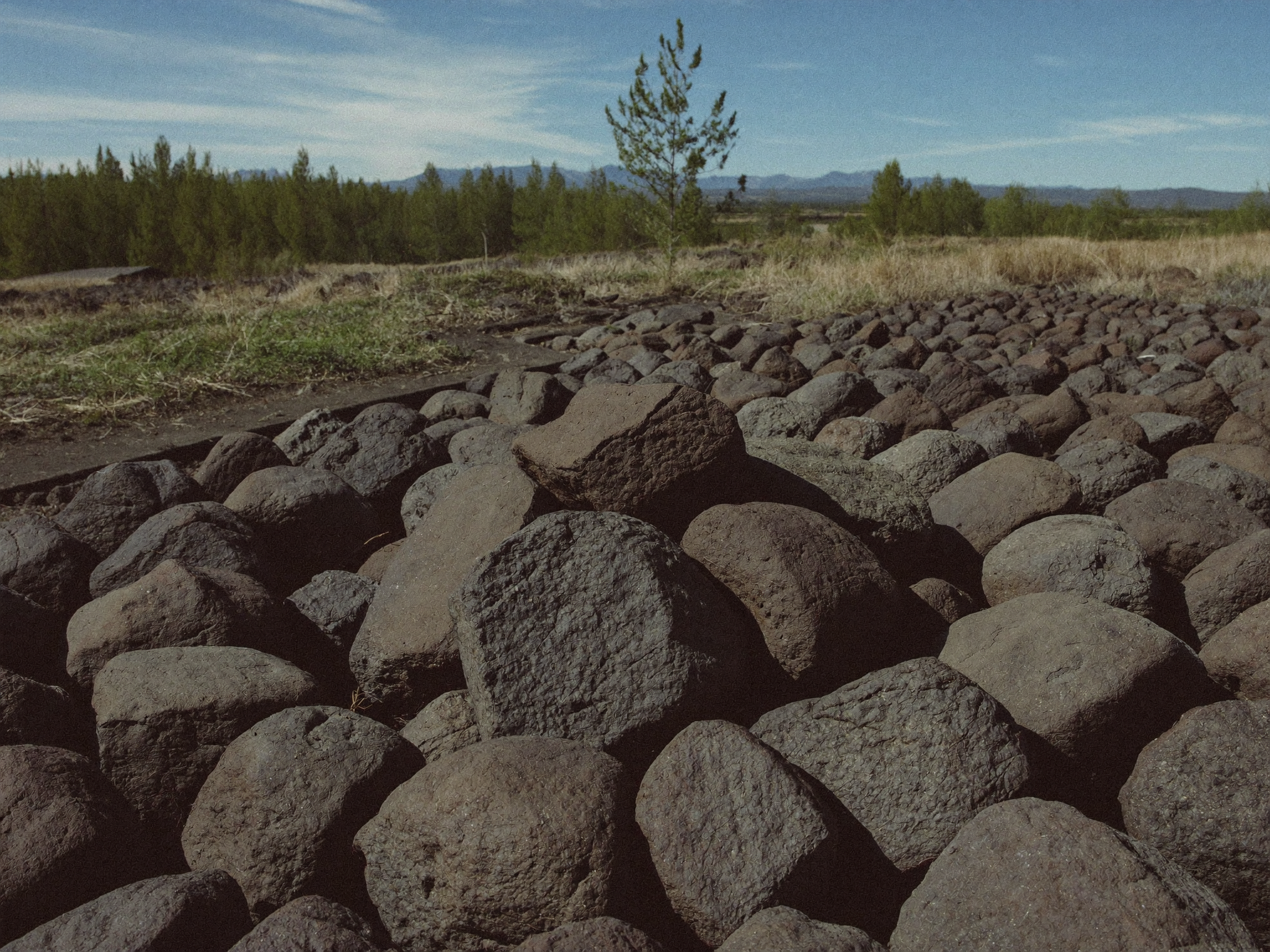
Use 10 pounds of lava rock per square foot of burner area, aiming for a 3-inch depth. For a 24-inch round pit, that is roughly 30 to 35 pounds. For a 36-inch round pit, roughly 70 to 80 pounds. Always let wet rocks dry for 48 hours before lighting. Never exceed 4 inches of depth, which can restrict gas flow and reduce your flame.
What lava rock actually does in a gas fire pit
Most people treat lava rock as decoration. It is not. In a gas fire pit, the rock bed does three functional jobs that affect how the pit performs every time it is used.
The lava rock sits above the burner, concealing it from view and weather. Gas rises through the pores between the rocks and ignites at the surface, creating a flame that appears to rise from the rock bed itself.
Burner protection. The rock layer puts physical distance between the burner ports and the flame zone above. Without media, the flame burns directly against the burner, accelerating wear on the metal and the ignition components underneath. A 3-inch rock bed absorbs and disperses the heat before it reaches the burner itself.
Even flame distribution. An uncovered burner creates a row of discrete jets that look artificial and deliver uneven heat. Gas rising through a bed of porous rock disperses laterally as it moves upward, igniting across a wider, more consistent surface that produces a fuller, more natural-looking flame.
Heat retention after shutdown. Lava rock is a natural basalt, the same volcanic material used in commercial and industrial insulation applications. After the gas is off, the rock bed continues radiating warmth for up to two to three hours, which meaningfully extends the comfortable sitting time around the pit on a cool evening.
How much lava rock you need: the numbers by pit size
The standard is 10 pounds of lava rock per square foot of burner area at a 3-inch depth. This comes from a density of approximately 22 pounds per cubic foot for medium lava rock, which is the most commonly used size. Always measure the internal burner area, not the outer pit dimensions.
| Pit size (internal) | Shape | Approx. sq ft | Pounds needed (3 in depth) | Add 15% for settling |
|---|---|---|---|---|
| 18 in | Round | 1.8 | 18 lb | 21 lb |
| 24 in | Round | 3.1 | 31 lb | 36 lb |
| 30 in | Round | 4.9 | 49 lb | 56 lb |
| 36 in | Round | 7.1 | 71 lb | 82 lb |
| 42 in | Round | 9.6 | 96 lb | 110 lb |
| 24 × 24 in | Square | 4.0 | 40 lb | 46 lb |
| 36 × 20 in | Rectangular | 5.0 | 50 lb | 58 lb |
| 48 × 24 in | Rectangular | 8.0 | 80 lb | 92 lb |
Always add 10 to 15 percent to account for settling. Lava rock compresses slightly over the first few fires as the pieces shift into a more stable configuration, which can reduce apparent depth by half an inch or more. Having extra on hand means topping up without placing a second order.
Lava rock calculator
What size lava rock to choose
Lava rock for fire pits is sold in sizes ranging from 3/4-inch gravel up to 4-inch or larger decorative pieces. The size affects how the gas flows through the bed and how the finished pit looks.
Medium lava rock between 1 and 2 inches is the best all-around choice for most residential gas fire pits. It packs well enough to conceal the burner without restricting gas flow the way very small rock can.
For most residential gas fire pits, medium rock between 1 and 2 inches is the right call. It covers the burner completely, allows gas to flow upward without restriction, and settles into a stable layer that does not shift around in wind. Very small rock under 3/4 inch packs too tightly and can impede gas flow, which shows up as a reduced or uneven flame. Very large rock over 3 inches is primarily aesthetic and works better in wide commercial pits or as a top layer over a base of medium rock.
Red vs black: does color matter?
Both red and black lava rock are natural basalt with identical thermal properties. The color difference is a result of the iron content in the original magma and how quickly it cooled. Red tends to lighten and fade slightly over time with repeated heat exposure. Black looks grey with extended use, which is normal. Neither color affects performance. Lighter-colored rocks show soot and discoloration more visibly and require more frequent cleaning, which is the only practical distinction.
The wet rock warning: what actually happens and how to prevent it
This is the most important safety point on the page. Wet lava rocks can crack or shatter violently when heated rapidly. The mechanism is simple: water trapped inside the porous rock converts to steam as the temperature rises. Steam expands to roughly 1,700 times the volume of liquid water. If that expansion is faster than the steam can escape through the rock's pores, the internal pressure exceeds the rock's structural limit and it fractures, sometimes sending fragments outward from the pit.
EXPLOSION RISK BY ROCK TYPE AND CONDITION
Relative risk values. Never substitute landscaping rock or found river stones for fire-rated lava rock. They hold moisture differently and were not formed under the same thermal conditions.
One important distinction: the USDA Forest Service notes that lining a campfire pit with rocks carries explosion risk, specifically because random field rocks or river stones often contain trapped moisture and were not formed under the same conditions as lava basalt.[1] Fire-rated lava rock sold for gas fire pit use is sourced specifically for its thermal stability and vesicular structure, which allows moisture to escape more gradually than denser sedimentary rocks.

Can you use lava rocks in a wood-burning fire pit?
Yes, and it serves a different purpose than in a gas pit. In a wood-burning fire pit, there is no burner to conceal or protect. Instead, a shallow base layer of lava rock, 1 to 2 inches, improves airflow under the fire by raising the wood off a flat metal or concrete floor. Better airflow from below produces a cleaner, hotter burn with less smoke, which connects directly to what the EPA recommends for clean backyard burning: a hot, well-fed fire rather than a smoldering one.
The wet rock caution applies here too, but the exposure is different. In a wood-burning pit, the rocks are exposed to higher temperatures from direct wood combustion rather than the steady, controlled heat of a gas burner. After rain, allow the same 24 to 48 hours of drying time before lighting wood over lava rock.
How to clean lava rocks from a fire pit
Lava rock needs cleaning when soot and debris accumulate to the point of reducing flame quality or causing uneven burn patterns. For a pit used weekly, this typically means once or twice per season. The process is straightforward but has one non-negotiable rule: the rocks must be completely dry before going back into a lit pit.
Let the pit cool completely
Lava rock retains heat for hours after the flame goes off. Wait at least two hours after shutting down before handling the rocks. Testing with a bare hand on one rock before reaching in is the simplest check.
Remove and inspect
Lift rocks into a bucket or colander. Discard any that are crumbling, have broken into small pieces, or have deteriorated to fine grit. These have reached the end of their useful life and should be replaced rather than cleaned.
Rinse with clean water
A garden hose works well. For grease, food residue from cooking nearby, or stubborn soot, soak in a mild dish soap solution for 10 to 15 minutes, then rinse thoroughly. Any soap residue left in the porous rock will affect the flame odor the next time the pit runs.
Dry for at least 48 hours
Spread the rocks in a single layer on a dry surface in direct sunlight. In humid climates, give it a full 48 hours. The rocks must be completely dry, not just dry on the surface. Moisture inside the pores is what causes fracturing when heated.
Clean the burner pan while rocks are out
With the rocks removed, inspect the burner ports for any debris or clogged holes. A soft brush or compressed air clears most blockages. Any food or grease drips that made it through the rock bed should be cleaned now. See the fire pit cleaning guide for the full burner maintenance process.
Replace rocks at correct depth and cure
Return the clean, dry rocks to the pit at a 3-inch depth. Run the flame on low for 30 minutes before bringing it to full output. This curing step allows any residual moisture to escape gradually rather than building pressure. Top up with fresh rock if the layer looks thin after settling.
When to replace lava rocks
Properly maintained lava rocks last one to two years with regular use before needing full replacement. Three signs indicate it is time:
Lava rock that breaks down produces fine particles that can migrate into the burner ports below. If you have been running the pit with degraded rock for a while and then notice uneven flames, clean the burner ports before replacing the media to make sure the blockage has been cleared. Our fire pit maintenance guide covers the full seasonal inspection process.
Lava rock vs fire glass: which should you use?
Both work. The practical difference comes down to cost, aesthetics, and how much cleaning you want to do. Fire glass is roughly five times the cost of lava rock per pound and provides only half the coverage volume because it is denser. Lava rock runs approximately $2 to $3 per pound versus $10 and up for fire glass.
One effective approach is to use lava rock as a base layer to cover and protect the burner, then top it with a thinner layer of fire glass for appearance. This hybrid setup reduces the total fire glass cost significantly while delivering the visual effect of a full glass bed. See the full breakdown in our fire glass vs lava rock comparison.
Frequently asked questions
How much lava rock do I need for a fire pit?
Can lava rocks explode in a fire pit?
How deep should lava rocks be in a fire pit?
How long do lava rocks last in a fire pit?
Can you use lava rocks in a wood-burning fire pit?
What size lava rocks should I use for a fire pit?
How do you clean lava rocks from a fire pit?
Sources
- USDA Forest Service, Sequoia National Forest, "Campfire Tips." Notes not to line a fire pit with rocks due to explosion risk from moisture.
- Lava rock density of approximately 22 pounds per cubic foot and coverage of 10 pounds per square foot at 3-inch depth: consistent across multiple fire pit media suppliers and calculator references.