- Home
- Best smokeless fire pits
Buying guide
The best smokeless fire pits
Eight pits, compared on the five specs that actually decide the purchase: burn diameter, steel, ash pan, cooking support, and weight. Everything else is finish.
We earn a commission from qualifying purchases made through links on this page, at no extra cost to you. It does not change which pits we recommend. Full disclosure.
Quick picks
Real secondary combustion, light enough to move alone, and the ash pan makes cleanup a lift and dump.
See whyHeavy gauge steel, made in Pennsylvania, with a sear plate built into the rim. It never moves again.
See whyRuns wood or pellets, weighs almost nothing, and costs a fraction of the premium tier.
See whyFifteen inches across. Fits a balcony, a small patio, or the back of a truck.
See whyBefore you scroll to the picks
- Diameter decides the fire, not the price. A 19 inch pit and a 27 inch pit are different products, not different tiers of the same product.
- The ash pan is the daily quality of life feature. Pits without one need a shovel or a shop vacuum.
- Weight is the honest proxy for steel gauge. It is also the thing that decides whether the pit ever moves again.
- Wet wood defeats every pit on this list. No amount of engineering fixes a 30 percent moisture log.
Every pit in this guide runs the same underlying trick. Cold air enters vents at the base, climbs the cavity between two steel walls, gets superheated on the way up, and fires back into the top of the fire through a ring of jets. That reignites the smoke before it can leave the pit. If you want the mechanism in detail, we walk through it on the airflow diagram on our fire pit guide.
What separates these eight is not whether secondary combustion works. It works in all of them. What separates them is what happens the other ninety percent of the time you interact with the pit: hauling it, cleaning it, cooking on it, and finding somewhere to put it in November.
The picksEight smokeless fire pits worth buying
Best overall
Solo Stove Bonfire 2.0
Solo Stove / 304 stainless steel / wood
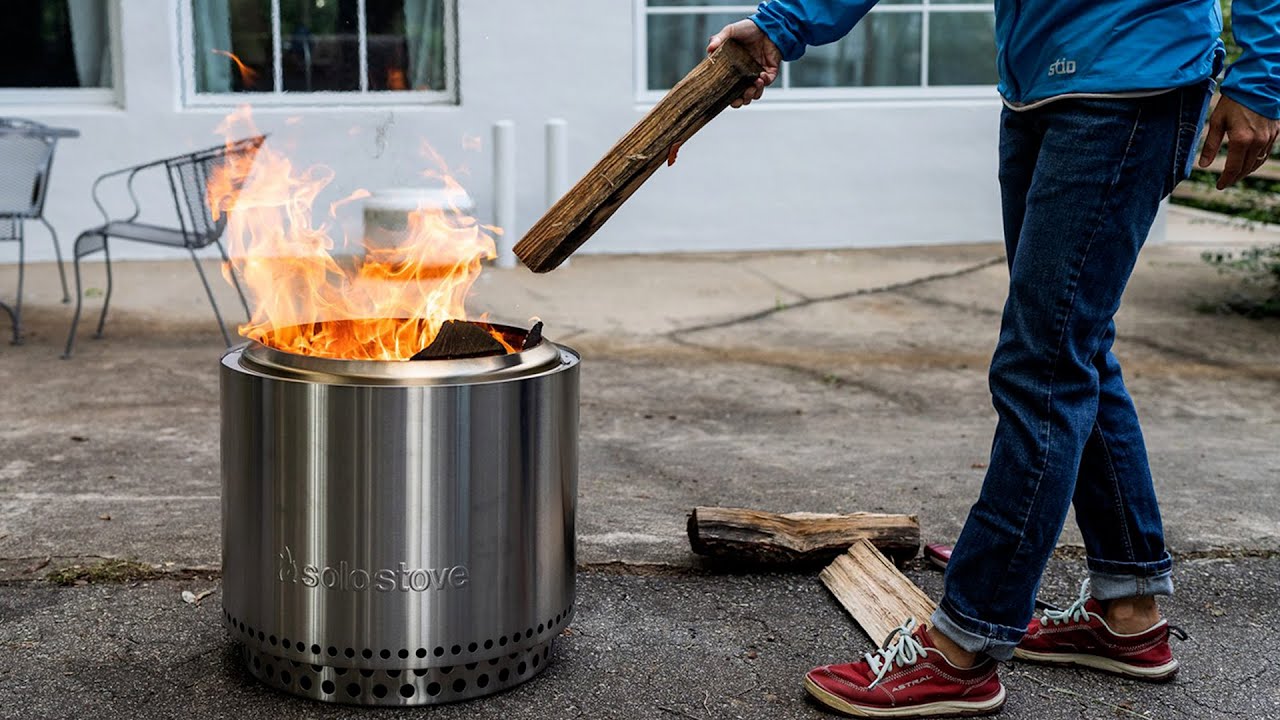
The pit that built the category, and still the right default. Nineteen and a half inches across is the sweet spot: big enough that a group of six is not staring at a candle, small enough that one person can pick it up and carry it into the garage. The 2.0 revision added the removable ash pan, which is the single biggest usability upgrade the category has seen. You lift the pan out and dump it, rather than tipping a hot cylinder or going in with a shovel.
It is thinner steel than the Breeo, which is a real trade off and also a genuine advantage: thin steel heats fast, so the walls reach secondary combustion temperature quicker and the smokeless phase starts sooner. The accessory ecosystem is the deepest in the category, though the cooking add ons are sold separately and are not cheap.
- Diameter
- 19.5 in
- Weight
- About 20 lb
- Ash pan
- Yes
- Cooking
- Add on
What works
- Light enough for one person to reposition
- Removable ash pan, cleanup in two minutes
- Heats fast, so the smokeless phase starts early
- Carry case included, easiest to store off season
What does not
- Thinner steel dents more easily than the Breeo
- Cooking accessories cost real money on top
- Manufactured overseas, if that matters to you
Best for cooking, best built
Breeo X24
Breeo / corten or 304 stainless / wood
Roughly three times the weight of the Bonfire, and that is the entire product thesis. The X24 is made in Lancaster County, Pennsylvania, out of heavy gauge steel, and it is designed to be placed once and left there permanently. Corten is the interesting option: it weathers to a deep rust patina on purpose and stops there, so the pit gets better looking with age rather than worse.
The reason to pay up is cooking. The X Series has a sear plate built into the rim, and the Outpost accessory turns it into a genuine live fire cooking setup with a grill, griddle, and pot hook. If you have ever wanted to sear a steak over a wood fire, this is the pit that does it without an adapter. The cost is cleanup: most Breeo models have no removable ash tray, so you are using a shovel or a shop vacuum.
- Diameter
- About 27.5 in
- Weight
- About 60 lb
- Ash pan
- No
- Cooking
- Built in rim
What works
- Heavy gauge steel, welds finished properly
- Sear plate in the rim, no adapter needed
- Corten develops a patina instead of failing
- Made in the United States
What does not
- No removable ash pan, so cleanup is manual
- Roughly 60 pounds, this is not portable
- Corten can bleed rust onto pavers underneath
Best large
Solo Stove Yukon 2.0
Solo Stove / 304 stainless steel / wood
The Bonfire scaled up to 27 inches. This is the pit for a group of eight or more, or for anyone who wants a fire that reads as a fire from across the yard rather than a bright cylinder on a patio. It keeps the removable ash pan, and it is the most direct competitor to the Breeo X24 on burn size while weighing about a third as much.
The catch is what always happens when you scale a firebox: it eats wood. A Yukon at full burn goes through logs noticeably faster than a Bonfire, and at forty odd pounds it is heavy enough that moving it is a two hand job rather than a casual one. Get the stand if it is going on grass.
- Diameter
- 27 in
- Weight
- About 42 lb
- Ash pan
- Yes
- Cooking
- Add on
What works
- Big fire, real warmth for a large group
- Keeps the removable ash pan
- Far lighter than the equivalent Breeo
What does not
- Consumes wood at a serious rate
- Heavy enough that it mostly stays put
- Stand for grass placement costs extra
Best technology
BioLite FirePit+
BioLite / steel and mesh / wood or charcoal
The only pit here that does not rely on passive airflow. BioLite puts 51 air jets on a rechargeable battery pack and forces oxygen into the fire, which means you control burn intensity from a dial or a phone rather than by rearranging logs. It works, and it works faster than a passive pit because it is not waiting for the walls to heat.
The other thing that makes it unusual is the shape. It is not a closed cylinder. The mesh sides let you actually see the fire, embers and all, which is what most people wanted from a fire in the first place. It burns charcoal as well as wood, and it doubles as a grill without an expensive add on. The trade offs are that there is a battery to keep charged and the build is lighter duty than a Solo Stove or a Breeo.
- Airflow
- 51 fan jets
- Weight
- About 20 lb
- Ash pan
- Drop tray
- Cooking
- Grill included
What works
- Adjustable burn intensity, by dial or app
- Open mesh, you can actually see the fire
- Burns charcoal and doubles as a grill
- Battery pack also charges a phone
What does not
- There is a battery, and it needs charging
- Lighter build than the premium steel pits
- Cleanup is messier than a lift out ash pan
Best design, easiest lighting
Tiki Brand 25 inch Smokeless Patio Fire Pit
Tiki Brand / powder coated steel / wood or pellets
The one that does not look like a piece of camping equipment. Curved bands, wood handles, wrought iron feet, a dark finish. It is the pit you buy when the patio has a design and a bare stainless cylinder would fight it.
The genuinely clever part is the fuel system. Tiki sells wood pellets in a waxed paper bag: you set a burn assist cone in the middle, drop the bag on top, light the four corners, and walk away. No kindling, no lighter fluid, no half bag of loose pellets to store. It is the fastest fire in this guide by a wide margin, and it comes with a removable ash pan. It also burns conventional firewood if you would rather. The catch is burn time. A pellet load burns hot and bright for roughly half an hour and then drops off, so a long evening means refeeding.
- Diameter
- 24.75 in
- Weight
- About 43 lb
- Ash pan
- Yes
- Fuel
- Pellets or wood
What works
- Lights in minutes with a pellet bag, no kindling
- Looks like furniture rather than gear
- Removable ash pan
- Accepts firewood as well as pellets
What does not
- Pellet loads burn out fast, expect to refeed
- Pellet bags are an ongoing cost
- Powder coat can chip, and chips become rust
Best budget
Blue Sky Outdoor Living The Ridge
Blue Sky / alloy steel / wood or pellets
Proof that secondary combustion is not a premium feature. The Ridge runs a proper double wall burn at a fraction of the cost of the name brands, and in side by side testing by outlets that do this professionally it holds its own on flame quality and smoke control. The base detaches and nests inside the firebox, and it ships with a carry case, so it packs down better than pits that cost three times as much.
What you give up is steel. It is black alloy rather than stainless, which means it will not stay pretty as long and it needs a cover more urgently than the premium options. It also burns through pellets quickly, so keep extra on hand. For a first smokeless pit, or for a pit that lives in a truck, that is a very acceptable trade.
- Diameter
- About 21.6 in
- Weight
- About 35 lb
- Ash pan
- No
- Fuel
- Pellets or wood
What works
- Real secondary combustion at a budget price
- Base nests inside the firebox for transport
- Carry case included
- Strong flame quality for the money
What does not
- Alloy steel, not stainless, so cover it
- Goes through pellets quickly
- No removable ash pan
Best for small spaces
Solo Stove Ranger 2.0
Solo Stove / 304 stainless steel / wood
Fifteen inches across, and that number is the entire point. The Ranger fits where a Bonfire does not: a townhouse patio, a small courtyard, a campsite table, the bed of a truck. It runs the same double wall system and keeps the removable ash pan, so nothing about the experience is compromised except scale.
Be honest with yourself about heat. A 15 inch firebox warms the people sitting immediately around it and not much more. If you are trying to take the edge off a cold evening for six people, this is the wrong pit and the Bonfire is the right one. If you are two people on a small patio who mostly want the fire, it is exactly right.
- Diameter
- 15 in
- Weight
- About 15 lb
- Ash pan
- Yes
- Cooking
- Add on
What works
- Fits genuinely small patios and balconies
- Same ash pan and same clean burn
- Light enough to carry one handed
What does not
- Small firebox means a short burn per load
- Limited heat beyond the immediate circle
- Wood has to be cut short to fit
Best pellet only
Flame Genie FG-16
Flame Genie / galvanized or stainless steel / pellets
A pellet purist's pit, made in the United States, and the cleanest burning unit here when you feed it correctly. Pellets are dry and uniform, which is precisely the condition secondary combustion is designed around, so a Flame Genie running properly produces almost nothing visible. Ash volume is a fraction of what firewood leaves behind.
It only burns pellets, and that is a real constraint. You cannot throw a log on it at the end of the night, you have to keep bagged fuel dry and on hand, and it wants attention: the burn is proactive rather than set and forget. The galvanized version is inexpensive; the stainless version costs considerably more and is the one worth buying if it lives outdoors.
- Fuel
- Pellets only
- Finishes
- Galvanized or stainless
- Ash
- Very low volume
- Origin
- Made in USA
What works
- Cleanest burn on the list when fed properly
- Very little ash to deal with
- Made in the United States
- Galvanized version is genuinely cheap
What does not
- Pellets only, no logs, ever
- Needs tending rather than loading and sitting
- Stainless version costs multiples of the galvanized
Side by sideHow the eight compare
Diameter is drawn to scale below, because a spec sheet number does not communicate what a nine inch difference in burn width looks like in a yard.
Burn diameter, to scale
What the size difference actually looks like
Diameters are manufacturer reported and describe the outer bowl, not the usable burn width, which is smaller on every double wall pit because the cavity eats into it.
Weight
Which of these you can actually pick up
Reported weights vary between sources and production runs, particularly for the Bonfire and the X24, so treat these as bands rather than exact figures. The useful line is around 40 pounds: below it, one person moves the pit casually. Above it, the pit lives where you put it.
| Pit | Diameter | Weight | Material | Fuel | Ash pan | Cooks | Best for |
|---|---|---|---|---|---|---|---|
| Bonfire 2.0 | 19.5 in | About 20 lb | 304 stainless | Wood | Yes | Add on | Most people |
| Breeo X24 | About 27.5 in | About 60 lb | Corten or stainless | Wood | No | Built in | Live fire cooking |
| Yukon 2.0 | 27 in | About 42 lb | 304 stainless | Wood | Yes | Add on | Big groups |
| BioLite FirePit+ | Open mesh body | About 20 lb | Steel and mesh | Wood or charcoal | Drop tray | Included | Camping and grilling |
| Tiki 25 in | 24.75 in | About 43 lb | Powder coated steel | Pellets or wood | Yes | No | Design and fast lighting |
| Blue Sky Ridge | About 21.6 in | About 35 lb | Alloy steel | Pellets or wood | No | No | Budget entry |
| Ranger 2.0 | 15 in | About 15 lb | 304 stainless | Wood | Yes | Add on | Small patios |
| Flame Genie FG-16 | Compact | Light | Galvanized or stainless | Pellets only | No | No | Cleanest burn |
Specifications are manufacturer reported and differ between sources and production runs. Verify dimensions against the current listing before buying, especially if the pit has to fit a specific space.
Buying criteriaHow to choose between them
Start with diameter, not price
Every other decision follows from how big the fire needs to be. Under 20 inches is a two to four person fire. Around 20 to 25 inches is the standard backyard fire for a group of six. Past 27 inches you are heating a real gathering and feeding it accordingly. Buying a 15 inch pit and hoping it warms eight people is the most common regret in this category, and no amount of engineering fixes it.
Then decide whether the pit ever moves
This is the fork in the road, and it is really a question about weight. If the pit needs to go into a garage in winter, come to a friend's house, or ride in a truck, you want something under about 40 pounds and you want a carry case. If it is going on a patio and staying there for a decade, the extra steel is a feature and the weight is irrelevant.
Take the ash pan seriously
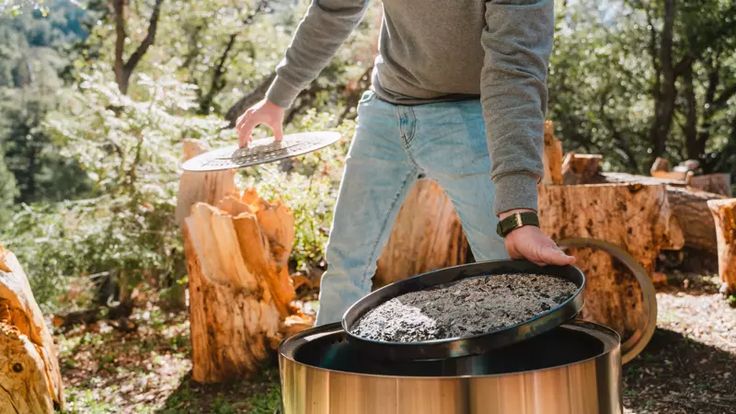
It sounds like a minor convenience and it is not. Without one, cleaning a pit means either tipping a heavy cylinder full of fine ash, or going in with a shovel and a shop vacuum. You will do this after every few burns for as long as you own the pit. The pits here with removable pans are the Bonfire, the Yukon, the Ranger, and the Tiki.
Only pay for cooking if you will cook
The Breeo premium is largely a cooking premium. The sear plate and the Outpost system are genuinely good, and they are wasted money if the pit's job is marshmallows. Solo Stove's cooking accessories work but cost enough that adding them to a Bonfire narrows the price gap considerably. Be honest about which one you are.
Check before you buy
Model fire code keeps a portable outdoor fireplace at least 15 feet from a structure or combustible material, and many local ordinances go further or add a property line setback. Measure the spot before you order the pit, not after. Details in our fire pit safety and clearance guide.
Reality checkWhat smokeless actually means
Nobody selling these pits will lead with this, so we will.
None of these pits are smoke free. They are dramatically lower smoke, which is a real and worthwhile difference, but the marketing word oversells the physics. Secondary combustion only runs once the walls are hot, which means every pit here smokes during startup and again during burnout. That is not a defect. It is how the system works.
The variable you control is moisture. Wet or unseasoned wood releases more vapor than the jet ring can reignite, and the smoke comes straight back regardless of what the pit cost. The Environmental Protection Agency recommends firewood below 20 percent moisture content, seasoned roughly six months for softwood and at least a year for hardwood. A cheap moisture meter answers the question in seconds and will do more for your smoke output than upgrading from a $200 pit to a $600 one.
The other two things that defeat secondary combustion are overloading, which smothers the airflow the system depends on, and burning anything other than clean dry wood or pellets. Yard waste, treated lumber, and trash all produce smoke the jets cannot reburn, and some of them produce compounds you should not be breathing. There is more on species and seasoning in our firewood guide.
QuestionsFrequently asked
Which smokeless fire pit is best overall?
For most buyers, the Solo Stove Bonfire 2.0. It runs a genuine secondary combustion burn, it is light enough for one person to reposition, and the removable ash pan turns cleanup into a lift and dump instead of a shovel job. If you want to cook over live fire and the pit has a permanent home, the Breeo X24 is the better buy despite costing more and weighing three times as much.
Is a smokeless fire pit worth the money?
It depends on how close you sit and who your neighbors are. A smokeless pit costs roughly two to four times what an open bowl costs. What you buy is the end of the smoke shuffle, less smoke smell in your clothes and hair, a hotter burn from the same wood, and the ability to run a fire on a small patio without smoke settling over a fence. On a large open property with seating spread out, an open bowl is often enough.
Do smokeless fire pits produce any smoke at all?
Yes. Secondary combustion only runs once the walls are hot, so every smokeless pit smokes during startup and again during burnout. Wet or unseasoned wood defeats the system at any point in the burn, because it releases more vapor than the jet ring can reignite. Dry wood is what makes the feature work.
Can you put a smokeless fire pit on a deck?
Only with a stand or heat shield underneath, and only if your local code allows it. The underside of a smokeless pit gets extremely hot because the fire sits close to the base, which is why manufacturers sell purpose built stands. Model fire code also sets a minimum distance from structures and combustible material, and many jurisdictions restrict open flame devices on combustible decks outright.
Do you burn wood or pellets?
Both work, and pellets often work better. Pellets are uniform in size and very low in moisture, which is exactly the condition secondary combustion wants, so they light fast and burn clean. The trade off is burn time: a pellet load burns out faster than a stack of split logs and needs refeeding. The Tiki, the Blue Sky, and the Flame Genie all run pellets, and the first two also take firewood.
How long will one of these last?
Longer than the fire will ever kill it, if you keep water out of it. Stainless and corten both survive heat cycling. What destroys fire pits is standing water freezing in the bowl, and rust starting under a chipped powder coat. A cover is the highest return purchase in this entire category and costs a fraction of the pit.
Solo Stove or Breeo?
Solo Stove if you want light, clean, and easy: it moves, it stores, and the ash pan makes cleanup trivial. Breeo if you want heavy, permanent, and made in the United States, and especially if you want to cook. The smokeless performance is close enough between them that it should not be your deciding factor. Weight, cleanup, and cooking should be.
Keep readingRelated guides
Affiliate disclosure
FirePitSpot is a participant in the Amazon Services LLC Associates Program, an affiliate advertising program designed to provide a means for sites to earn advertising fees by advertising and linking to Amazon.com. As an Amazon Associate, we earn from qualifying purchases.
Links on this page are affiliate links. If you click one and make a purchase, we may receive a commission at no additional cost to you. This does not influence which products appear here or how they are ranked. We do not accept payment for placement.
Prices and availability on merchant sites change frequently and are accurate only at the moment you view them. Read our full affiliate disclosure and our editorial policy.
How we picked
Selection started from the specs that survive contact with a backyard: burn diameter, steel type and gauge, whether ash removal is a lift or a chore, cooking support, and weight. We cross checked manufacturer figures against independent hands on testing from outlets that put these pits in front of real fires, and where reported numbers disagreed, we said so rather than picking the flattering one.
Safety and code claims come from published fire code and from the Environmental Protection Agency rather than from brand marketing. More on how we test and who we are.