
The short version
- Standard cinder block does not belong against direct flame. Trapped moisture inside the porous block converts to steam under heat, and the pressure can crack or fracture the block.
- Fire brick and steel ring inserts are the two safe choices for the inner wall. Both are rated for sustained direct contact with fire.
- The outer decorative wall is a separate decision. Regular pavers and stone are fine there, as long as they are not touching the flame directly.
- Drainage matters as much as the fire rating. A gravel base keeps water from pooling and re-soaking your masonry between uses.
- Check clearance and permits before you dig, not after the pit is built and you discover it is too close to the house.

Most DIY fire pit content treats material choice as an aesthetic decision. It is also a structural and safety decision, and it is the single most common place a first time build goes wrong. This guide separates the two questions properly: what to build the wall that touches fire out of, and what to build everything else out of.
Section oneMaterial comparison, inner wall versus everything else
One wall touches fire directly. Every other material decision is downstream of getting that one right.
| Material | Safe for inner wall | Why |
|---|---|---|
| Fire brick | Yes | Dense, low porosity clay fired at high temperature specifically for sustained direct flame |
| Steel fire ring insert | Yes | Purpose built for direct fire, the most common solution in prefabricated fire pit kits |
| Standard cinder block | No | Porous, absorbs moisture, prone to spalling when heated rapidly |
| Regular clay brick | No | Not fired to the same standard as fire brick, can crack under repeated heat cycling |
| Concrete pavers | No | Same moisture and spalling risk as cinder block, only rated for exterior weathering, not direct flame |
| Natural stone (river rock, sandstone, limestone) | No | Porous sedimentary stone can trap moisture and fracture violently under direct heat |
| Concrete pavers, stone, brick, as outer wall only | Yes, if not touching flame | Fine for the decorative exterior once separated from the fire by a proper inner liner |
The distinction that matters is direct flame contact, not the material's general durability. A paver that handles decades of weather and foot traffic without issue can still fail quickly against sustained open flame.
Section twoWhy cinder block actually fails against direct heat
This is not a vague caution. It is a specific, well understood physical mechanism called spalling.
Signature diagram
How trapped moisture cracks a block
The mechanism, plainly
Standard concrete masonry units are porous by design, which is part of what makes them lightweight and affordable. That same porosity lets them absorb rainwater and ground moisture over time, even when they look and feel dry on the surface.
When direct flame heats the block quickly, the water trapped inside converts to steam. Steam takes up dramatically more volume than liquid water, and if it cannot escape through the block's pores fast enough, the resulting internal pressure has to go somewhere. That is spalling: chunks of the surface breaking or popping off, sometimes forcefully enough to throw fragments a real distance.
Fire brick avoids this because it is manufactured dense and low porosity specifically to resist both the heat and the moisture retention that causes it.
If you already have a cinder block pit
Do not assume a block that has not cracked yet is safe indefinitely. Spalling risk increases after blocks have been rained on and then subjected to a hot fire without time to dry. Line the inside with fire brick or a steel insert before your next use rather than waiting for a failure to tell you it was a problem.
Section threeThe build, step by step
Six steps, in order, from bare ground to a finished pit.
Method
Site prep to finished pit
- Confirm placement and codeCheck local fire code, clearance distance from structures and property lines, and whether your jurisdiction requires a permit, before marking anything on the ground.
- Mark and excavate the baseMark the outer ring and excavate to a level, compacted subgrade a few inches deep across the full footprint.
- Add a compacted gravel baseFill with a few inches of compacted paver base or crushed gravel, leveled evenly, which handles drainage and gives the structure a stable footing.
- Lay the fire rated inner ringSet fire brick or a steel fire ring insert as the wall that will actually contact flame.
- Build the outer wallStack pavers, natural stone, or decorative block around the fire rated liner, with a gap or thermal break between the two layers.
- Backfill and finishBackfill the gap between inner and outer walls with sand or gravel, and confirm the finished pit is level with clear drainage away from the base.
Section fourSizing the pit to the space
Bigger is not automatically better here either, the same lesson that applies to buying a manufactured pit applies to building one.
Chart
Rough diameter by group size
Rough sizing guidance for a masonry fire pit with seating pulled up around the outside. Confirm your total footprint, including seating clearance, fits within your available space and clearance distance before finalizing a diameter.
A 3 foot diameter pit needs roughly 25 fire bricks for the inner wall at a modest wall height, and larger diameters scale up proportionally. Always order a few extra bricks beyond the calculated count, since fitting brick around a curve requires cutting pieces to close the circle, and cut fire brick is not always reusable.
Section fiveDrainage, the detail that determines longevity
A fire pit built directly on soil with no drainage plan will hold water, and holding water is exactly what causes masonry to fail early.
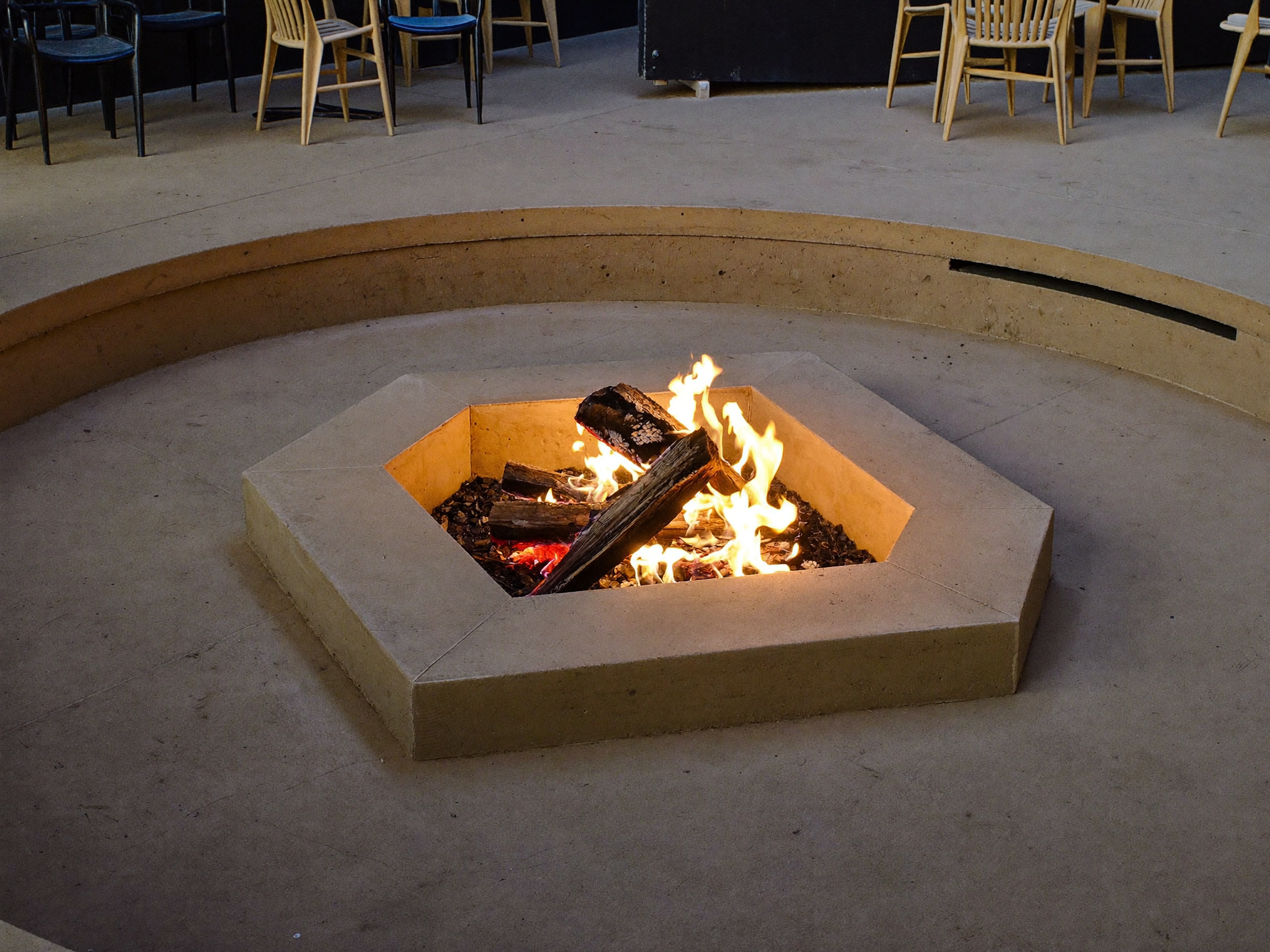
A compacted gravel base a few inches deep does two jobs at once: it gives the finished structure a stable, level footing, and it lets rainwater drain through rather than pooling against the base of your masonry. On a site with naturally poor drainage, some builders add a perforated pipe beneath the gravel layer to move water away from the pit entirely. A cover for the pit when it is not in use reduces how much water the structure has to shed in the first place, which matters for exactly the same reason covered in the spalling section above: less absorbed moisture means less risk the next time you light a fire.
Clearance still applies to a DIY build
Building your own pit does not exempt it from fire code. Model fire code generally keeps a portable outdoor fireplace at least 15 feet from a structure or combustible material, and NFPA educational guidance suggests a minimum of 10 feet from anything that can burn. A permanent masonry pit is not portable, so confirm your specific jurisdiction's requirement for fixed fire features before you excavate. Full detail in our fire pit safety and clearance guide.
Section sixFrequently asked questions
Can you use regular cinder blocks for a fire pit?
Not safely as the inner wall in direct contact with flame. Standard concrete masonry units are porous and can absorb moisture from rain and ground contact. When that trapped moisture is heated rapidly by direct fire, it converts to steam faster than it can escape through the block's pores, and the resulting pressure can crack the block or cause pieces to break off forcefully, a failure mode called spalling. Fire brick or a steel fire ring insert is the safer choice for anything touching direct flame.
What is the difference between fire brick and regular brick?
Fire brick, also called refractory brick, is made from dense, low porosity clay fired at a higher temperature specifically to withstand sustained direct flame contact without cracking. Regular clay brick and standard concrete pavers are not manufactured to that standard and can crack, spall, or degrade with repeated exposure to an open fire's heat.
How many bricks do you need to build a fire pit?
It depends entirely on the pit's diameter and wall height, but a common reference point is roughly 25 fire bricks for a 3 foot diameter pit built a few courses high. Larger diameters and taller walls require proportionally more, and you should always order extra to account for cutting and fitting around the circle.
Do you need a permit to build a fire pit?
Often not for a small, contained residential fire pit, but this varies by city and county, and some jurisdictions require a permit for any permanent outdoor fire feature. Check with your local fire department or building department before construction, not after, since some require inspection of the finished clearance and construction.
How do you keep water from pooling in a fire pit?
Build on a compacted gravel base rather than directly on soil, which allows water to drain through rather than collecting in the pit floor. Some builders add a perforated drain pipe beneath the gravel layer for sites with naturally poor drainage. A cover for when the pit is not in use also reduces how much water accumulates in the first place.
Keep readingRelated guides
How we research
Material safety guidance in this article reflects established masonry and fire construction practice regarding porosity, moisture retention, and thermal shock in concrete versus fire rated refractory brick. Clearance figures come from published fire code and NFPA educational guidance rather than general construction blogs.
Learn more about how we test and who we are.