
The short version
- Looking out is not the same as being out. Ash insulates buried coals so effectively that a fire can stay dangerously hot for hours after the surface goes dark.
- Wood fires need drown, stir, drown. One pass of water rarely reaches everything. Stirring exposes what the first pour missed.
- Gas fire pits are shut off, not extinguished. Water is not part of the process, and pouring it on hot glass or lava rock media can crack or fracture it.
- Ash needs days, not minutes, to cool. Store it in a metal container with a lid, away from anything combustible, once it is confirmed cold.
- Never leave a fire pit unattended before it is confirmed out. This is an explicit fire code requirement, not a suggestion.
Most fire pit safety content focuses on lighting the fire, sizing the burner, and keeping clearance from the house. Almost none of it covers the other end of the evening, and that gap matters. A fire that is put out incorrectly does not fail loudly. It fails quietly, hours later, after everyone has gone inside.
The mechanism behind that is straightforward. Ash acts as an insulating layer, the same way it does in a fireplace or a wood stove, which means coals buried under a few inches of ash can hold enough heat to reignite or ignite something nearby long after the visible fire looks finished. A municipal fire protection district's safety guidance puts it plainly: even when ash is not smoking or radiating noticeable heat, it can harbor hot coals for an extended period, because the ash around them acts as insulation rather than letting them cool. That single fact is the reason every step below exists.
Signature diagram
What the surface hides
Why this matters
A layer of ash only an inch or two thick can fully hide a glowing coal bed from view. From above, the fire looks finished. Underneath, oxygen is still reaching the coals just enough to keep them hot, sometimes for hours.
This is exactly why the extinguishing method below relies on stirring, not just pouring water once and walking away. Stirring physically exposes the hidden layer so water can actually reach it.
Source: Crystal Lakes Fire Protection District, fireplace and ash disposal safety guidance.
Section onePutting out a wood burning fire pit
Drown, stir, drown. Three steps, in that order, every time.
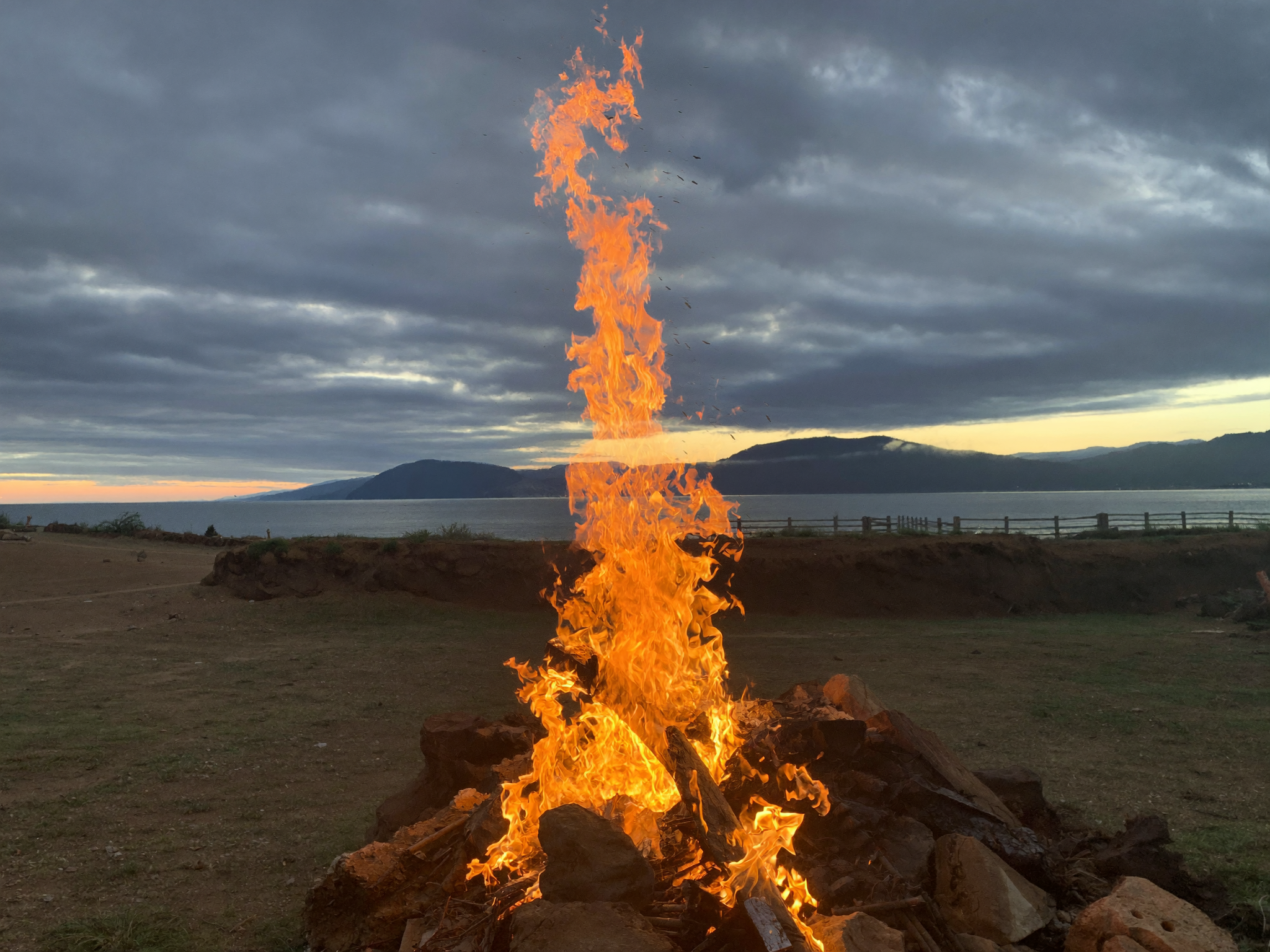
Method
The drown, stir, drown sequence
- Stop feeding the fire earlyStop adding wood well before you plan to leave, so the fuel already in the pit has time to burn down toward coals and ash rather than leaving fresh, half burned logs.
- Drown the entire fire bedPour water slowly and evenly across the whole bed, not just where you can see flame, until the hissing and steaming stop completely.
- Stir to expose hidden coalsUse a metal poker or a shovel to turn over the ash and coals. This is the step people skip, and it is the one that actually matters, since it exposes material the first pour of water never reached.
- Drown againPour water a second time over what the stirring just exposed. This second pass is what actually reaches the coals that were hiding under the surface.
- Check by touch, not by sightHover the back of your hand near the surface without touching it. Any warmth means repeat the cycle before you leave the fire unattended.
This sequence follows the same logic fire departments teach for campfires and outdoor burning generally: water alone, applied once, is not reliable for a fire bed with any depth to it.
Do not do this instead
Do not simply cover a fire pit with a lid or spark screen and assume that starves it of oxygen. Most fire pit lids and screens are not airtight, and a covered fire with unburned fuel can continue smoldering underneath for a long time. A lid is for keeping debris out of a cold, confirmed dead fire pit, not for extinguishing a live one.
Do not use sand or dirt as your primary method unless water is genuinely unavailable. Sand can smother flame on the surface while coals underneath continue to hold heat, since sand does not cool the material the way water does.
Section twoShutting off a gas fire pit
Gas fire pits are shut off, not extinguished. The sequence still matters.

Method
The gas shutoff sequence
- Turn the control knob to off firstThis stops the flow of gas to the burner and extinguishes the flame immediately.
- Close the supply valveFor a propane pit, close the valve on the tank itself. For a plumbed natural gas unit, close the dedicated shutoff valve on the line if your setup has one.
- Let the unit cool fully before touching media or coversFire glass, lava rock, and the burner housing all stay hot well after the flame is gone. Give the unit real time before you cover it or move anything.
- Inspect the hose and connections periodicallyNot every time you shut it off, but as routine maintenance, check for wear, cracking, or a loose connection at the regulator.
Never pour water on a gas fire pit to cool it faster
Fire glass and lava rock both hold heat after the flame is off, and it is tempting to speed up cooling with water. Do not. A sudden temperature change from cold water hitting hot tempered glass or hot porous rock can crack the glass or cause the rock to fracture, sometimes forcefully enough to throw fragments. Let the media cool on its own before covering the pit or handling it.
Section threeHow long ash actually stays hot
This is the step most people rush, and it is the one with the most room for error.
There is no single fixed number for how long ash stays dangerous, because it depends on how hot the fire burned, how much fuel remained, and how deep the ash bed is. What fire safety guidance consistently agrees on is the direction of the error to make: assume longer, not shorter.
| Stage | What to do | Why |
|---|---|---|
| Immediately after extinguishing | Do not remove ash | Coals can still be reigniting even after the visible flame is gone |
| Same evening | Leave ash in the pit | The fire pit itself is designed to safely contain residual heat, unlike a bag or bin |
| Several days later | Check by touch before moving | Many fire departments recommend a minimum cooling period measured in days, not hours, for any real fire |
| Confirmed cold | Safe to transfer to a metal container | Only once no warmth is detectable anywhere in the ash bed |
Guidance on exact cooling duration varies by source and by how large the fire was. When in doubt, wait longer and check again rather than assuming a fixed number of hours is automatically safe.
Section fourStoring and disposing of ash safely
The extinguishing method matters less if the ash ends up in the wrong container afterward.
- Use a metal container with a tight fitting lid. Never a plastic bin, cardboard box, or paper bag, all of which can ignite from residual heat that would not visibly bother a metal can.
- Keep the container away from the house and anything combustible. Set it on a non combustible surface such as concrete or gravel, not directly against a wooden deck or siding.
- Do not use a household vacuum on warm ash. Standard vacuums are not built to handle residual heat and can ignite from ash that still holds warmth.
- Wait for full confirmation before trash disposal. Once the ash has been stored in the metal container and shows no warmth after a further check, it is generally safe to dispose of through normal trash collection, though local rules vary.
For federal context on fire risk and injury data, the CPSC publishes ongoing fire research and statistics covering residential and outdoor fire incidents. General clearance and attendance requirements for fire pits themselves are covered in our fire pit safety and clearance guide.
Section fiveWhy attended until extinguished is not optional
This is not editorial caution. It is language pulled directly from fire code.
Model fire code and NFPA educational guidance both frame full extinguishment, not just a dwindling fire, as the point at which a fire pit can be safely left unattended. NFPA's fire pit safety guidance is direct about keeping a fire attended and having a way to extinguish it fully before walking away, rather than treating a naturally dying fire as equivalent to an extinguished one. A fire that is still smoldering is, functionally, still a fire.
This matters most in exactly the situation where it gets skipped: late in the evening, when the group is tired and the flame has died down to a dim glow that looks harmless. That dim glow is precisely the stage where the drown, stir, drown sequence still needs to happen, not the stage where it gets safe to skip.
Section sixFrequently asked questions
What is the correct way to put out a wood fire pit?
Drown, stir, and drown again. Pour water over the entire fire bed until the hissing stops, stir the ash and coals with a metal poker to expose anything still burning underneath, then pour water a second time over what you just exposed. Check by feeling for heat rather than relying on how it looks, since ash hides embers effectively.
Can you just let a fire pit burn out on its own?
Not if you plan to leave it unattended. Model fire code and NFPA guidance both treat an attended, fully extinguished fire as the standard, not a fire left to smolder down naturally. A fire that looks dead can still hold burning coals under the ash for hours, so walking away from a naturally dying fire is not the same as extinguishing it.
How do you turn off a gas fire pit?
Turn the control knob to off first, then close the valve at the propane tank or the gas line shutoff. Let the unit cool fully before covering it or moving it. Never pour water on hot glass or lava rock media to speed up cooling, since the sudden temperature change can crack glass or cause porous rock to fracture.
How long does fire pit ash stay hot?
Longer than it looks. Ash acts as an insulator, so coals buried underneath can stay hot for hours after the surface looks cool, and many fire departments recommend letting ash cool for several days before disposal. Treat all ash as potentially hot until you have confirmed otherwise by touch, not by sight.
How do you safely dispose of fire pit ash?
Once fully cooled, place ash in a metal container with a tight fitting lid, kept away from anything combustible and away from the house. Never use a plastic bin, cardboard box, or paper bag, since ash can hold enough heat to ignite these materials even after it appears cold.
Is it safe to leave a fire pit smoldering overnight?
No. A smoldering fire is not an extinguished fire, and embers can flare back up if wind picks up or nearby material shifts against them. Fire pits should be fully extinguished and confirmed cool before anyone leaves the area or goes to sleep.
Keep readingRelated guides
How we research
Extinguishing guidance in this article follows the general practice taught by fire departments and reflected in NFPA educational material, rather than being invented for this page. Where a specific figure, such as ash cooling time, varies meaningfully by source, we say so instead of presenting a single number as an official standard.
Clearance and attendance requirements referenced here are covered in full in our fire pit safety and clearance guide. Learn more about how we test and who we are.