
The short version
- Weight is the biggest practical difference. A comparable Breeo runs roughly 50 percent heavier than the equivalent Solo Stove, and it is not close.
- Ash pan versus no ash pan decides your weekly experience. Most Solo Stove models lift out and dump. Most Breeo models need a shovel or a shop vacuum.
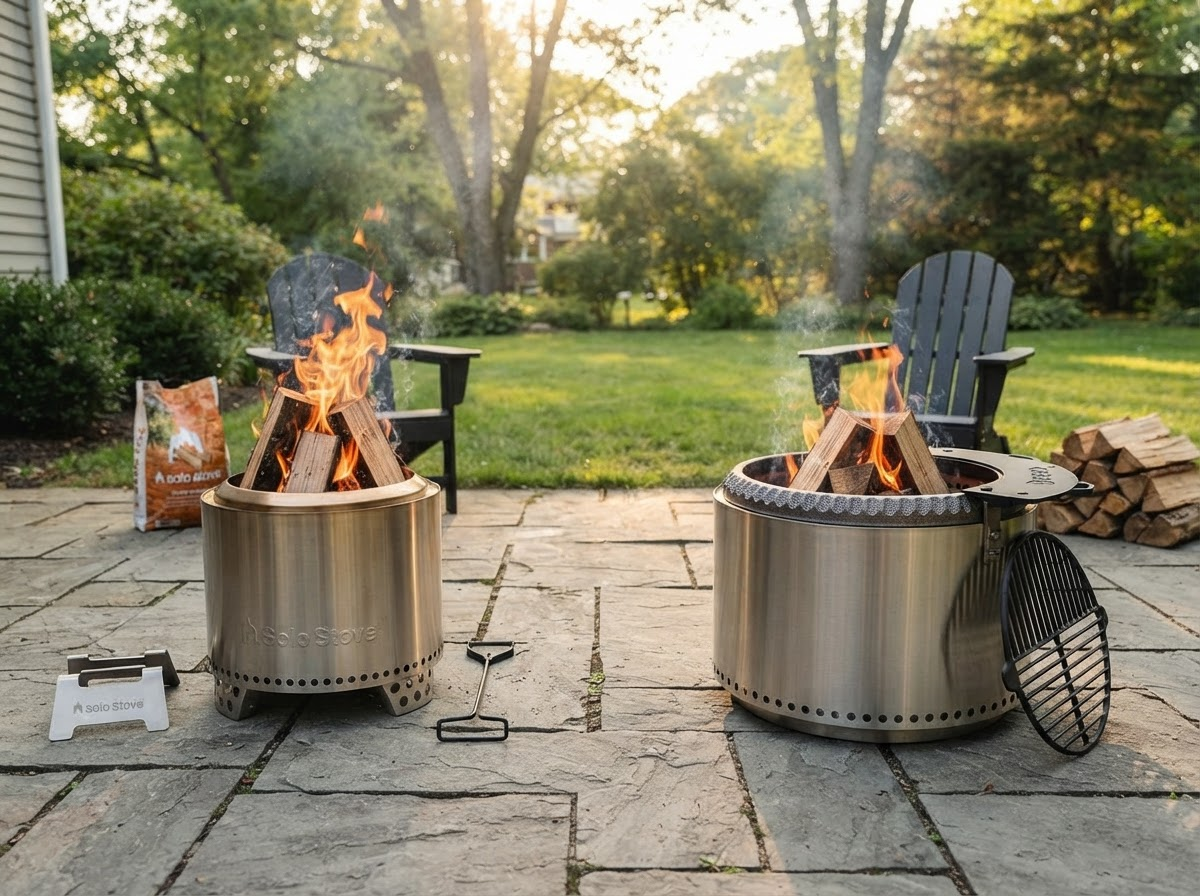
- Cooking is Breeo's built in strength. The sear plate lives in the rim itself, not as a bolt on accessory.
- Manufacturing origin is genuinely different. Breeo is made in Lancaster, Pennsylvania. Solo Stove is designed in the United States and manufactured overseas, primarily in China.
- Both run real secondary combustion. Neither brand has a meaningful edge on how clean the burn actually is once the walls are hot.
Solo Stove and Breeo get compared constantly because they created and popularized the same category, the double wall smokeless fire pit, at roughly the same time, and both are now the two names most people recognize before they even start shopping. That familiarity is exactly why the comparison gets muddled. Reviewers default to declaring a winner instead of explaining that the two companies made different engineering bets from the start, and those bets show up in almost every spec that actually matters day to day.
This guide goes through each of those bets one at a time: steel construction, weight, ash handling, cooking, warranty, and where each company actually builds its product. If you want the fire pit mechanism explained first, our how smokeless pits work guide covers the airflow both brands rely on.

Section oneSteel construction, and why it is not a simple better or worse question
Thinner steel and thicker steel both won here, just for different reasons.
Solo Stove's flagship line, including the Bonfire 2.0, uses a lighter gauge 304 stainless steel wall. Breeo's X Series uses noticeably heavier gauge steel, available in either corten weathering steel or stainless. Neither construction is a defect. They are optimized for opposite priorities.
Signature diagram
Thin wall versus heavy gauge, in cross section
What the gauge difference actually changes
Thinner steel absorbs and releases heat faster. That means the wall cavity on a Solo Stove reaches the temperature secondary combustion needs sooner after lighting, so the smokeless phase kicks in earlier in the burn. The trade off is that thinner steel dents and warps more easily under impact or careless handling.
Heavier gauge steel takes longer to heat through, so a Breeo can smoke a little longer at startup before the wall cavity is fully warmed. What it buys instead is real resistance to dents, plus a corten option that develops a stable rust colored patina on purpose rather than failing the way rust normally implies.
Both designs rely on the same core secondary combustion mechanism, covered in detail in our smokeless fire pit guide.
Section twoWeight and portability
This is the single biggest lived difference between the two brands, and it is not subtle.
At comparable burn diameters, Breeo consistently weighs far more than Solo Stove. The gap is not a rounding error. It is the difference between a pit one person carries with one hand and a pit that stays exactly where you set it down.
Chart
Weight at comparable sizes
The Yukon 2.0 and the X24 sit within half an inch of each other in burn diameter, which makes the weight gap between them, about 18 pounds, a fair like for like comparison rather than an artifact of comparing different sizes. Reported weights vary between sources and production runs, so treat these as bands rather than exact figures.
What that weight difference means in practice: a Solo Stove Bonfire or Yukon can be picked up and moved to a different part of the yard, packed into a garage for winter, or loaded into a truck for a weekend trip, all without real effort. A Breeo X24 is a two person lift at minimum, and realistically a pit you place once and leave there. Neither is wrong. It depends entirely on whether the fire pit needs to move.
Section threeAsh management
This is the difference you notice every single time you use the pit, not just once at purchase.
This sounds like a minor convenience until you have used a pit a dozen times. Without a removable pan, cleaning means either tipping a heavy cylinder full of fine ash or going in with a shovel and a shop vacuum. It is a real recurring difference in ownership experience, not a one time spec you check off during shopping.
Section fourCooking, where Breeo genuinely leads
This is the category where the two companies made the most divergent bet, and it shows.
If searing a steak over a live wood fire is part of why you want a fire pit at all, Breeo's approach removes a step Solo Stove still requires. The sear plate is not bolted on after the fact, it is part of the rim itself, which is the kind of design decision that only shows up once you actually try to cook on both.
Section fiveWhere each one is actually made
This is one of the clearest, most factual differences between the two brands, and it rarely gets stated plainly.
| Solo Stove | Breeo | |
|---|---|---|
| Founded | 2010 | 2011 |
| Design origin | United States | United States |
| Manufacturing location | Primarily China | Lancaster, Pennsylvania |
| Made in USA claim | No | Yes |
Both companies are American owned and headquartered in the United States. The distinction here is specifically where the physical fire pits are manufactured, which is a common point of confusion since both brands market themselves as American companies.
Neither approach is inherently better made. Manufacturing location affects supply chain, lead times, and whether domestic production matters to you personally, more than it predicts final build quality on its own. But it is a factual, checkable difference, and it is the single most requested clarification in this comparison, so it deserves a straight answer rather than marketing language from either side.
Section sixWarranty and what it actually covers
Both brands stand behind their steel. The fine print differs in ways worth reading before you buy.
| Solo Stove | Breeo | |
|---|---|---|
| Manufacturing defects | Covered, lifetime of the product against genuine defects | Covered, lifetime of the original purchaser |
| Rust or burn through | Varies by product line | 3 years from purchase, on covered products |
| Normal wear, cosmetic heat discoloration | Not covered | Not covered |
| Return window | Risk free trial period on select new products | Standard retailer return policy applies |
Warranty terms are set by each manufacturer and can change. Confirm current terms for the specific model and product line you are buying before purchase, since coverage details vary between individual products within each brand's lineup.
Section sevenWhich one should you actually buy
Stop comparing specs in the abstract and answer these two questions instead.
Buy Solo Stove if
- The pit needs to move, whether that is across the yard, into storage, or into a truck
- You want a removable ash pan and a two minute cleanup routine
- You want the smokeless phase to kick in as early in the burn as possible
- Cooking is occasional, not the main reason you want a fire pit
Buy Breeo if
- The pit has a permanent spot and is never moving again
- Live fire cooking, especially searing, is a real priority, not an afterthought
- You specifically want a fire pit manufactured in the United States
- Corten's aged patina appeals to you more than bright stainless
Same clearance rules apply to both
Whichever brand you choose, the fire code does not care which logo is on the steel. Model fire code generally keeps a portable outdoor fireplace at least 15 feet from a structure or combustible material, and NFPA educational guidance suggests a minimum of 10 feet from anything that can burn. Confirm the spot before you order either one. Details in our fire pit safety and clearance guide.
Section eightFrequently asked questions
Is Breeo or Solo Stove better?
Neither is objectively better, they are built around different priorities. Solo Stove is lighter, easier to move, and includes a removable ash pan on most models, which suits a pit that gets repositioned or stored seasonally. Breeo is heavier gauge steel made in Lancaster, Pennsylvania, with a sear plate built into the rim for live fire cooking, which suits a pit meant to stay in one place permanently and double as a cooking setup.
Is Solo Stove made in the USA?
Solo Stove is designed in the United States but manufactured overseas, primarily in China. Breeo fire pits are made in Lancaster, Pennsylvania. This is one of the clearest differences between the two brands and matters to buyers who specifically want a domestically manufactured product.
Which is heavier, Solo Stove or Breeo?
Breeo, by a wide margin at comparable sizes. The Breeo X24 weighs roughly 60 pounds, while the closest Solo Stove in burn diameter, the Yukon 2.0 at 27 inches, weighs about 42 pounds. Solo Stove's smaller Bonfire 2.0 at 19.5 inches weighs about 20 pounds, making it considerably easier for one person to carry and store.
Does Breeo or Solo Stove have a removable ash pan?
Most Solo Stove models, including the Bonfire, Yukon, and Ranger, include a removable ash pan that lifts out for a quick dump and cleanup. Most Breeo models do not include a removable ash pan, so cleanup typically means a shovel or a shop vacuum instead of a lift and dump.
Can you cook on a Solo Stove or a Breeo?
Both can be set up for cooking, but Breeo is built around it more directly. The Breeo X Series has a sear plate built into the rim and an accessory system called the Outpost that adds a grill, griddle, and pot hook without an adapter. Solo Stove offers cooking accessories for its lineup as well, but they are sold separately and are not integrated into the rim the way Breeo's are.
What is the warranty on a Solo Stove versus a Breeo?
Both brands offer long term coverage against manufacturing defects, though the terms differ by product line and are worth checking against the current listing before buying, since warranty terms can change. Neither warranty covers normal cosmetic changes like heat discoloration, which is expected on any bare steel fire pit over time.
Keep readingRelated guides
Affiliate disclosure
FirePitSpot is a participant in the Amazon Services LLC Associates Program, an affiliate advertising program designed to provide a means for sites to earn advertising fees by advertising and linking to Amazon.com. As an Amazon Associate, we earn from qualifying purchases.
This comparison was written independently. Neither Solo Stove nor Breeo reviewed or approved this content, and no payment was accepted from either company for placement or favorable coverage. Read our full affiliate disclosure and our editorial policy.
How we researched this comparison
Specifications for both brands were checked against current manufacturer information, including warranty terms and manufacturing origin, rather than relying on secondhand summaries. Where a figure is manufacturer reported and could change between production runs, such as exact weight, we say so rather than presenting it as a fixed constant.
Clearance and safety references come from published fire code and NFPA educational guidance, not from either brand's own marketing. More on how we test and who we are.