Open bowls and rings, not double wall smokeless pits. Five picks compared on the spec that actually predicts whether one lasts: steel gauge and material.
These are open designs, not smokeless. If you want reduced smoke, see our smokeless fire pits guide instead.
Steel gauge predicts lifespan more than brand does. Lower gauge number means thicker, longer lasting steel.
Cast iron holds heat far longer than steel after the fire dies down, at the cost of weight and price.
A spark screen is not optional on any open design. None of these have engineered ember control.
Watch our guide to the Best Wood Burning Fire Pits.
An open wood burning fire pit is the simplest, most direct way to have a real fire: no double walls, no airflow engineering, just a bowl or ring that holds burning wood and radiates heat outward and up. That simplicity is the appeal, and it is also why the buying decision comes down almost entirely to one question most listings do not make easy to answer: how thick and how durable is the metal actually going to be once it has weathered a few seasons.
The picksFive open wood burning fire pits worth buying
Thick-walled steel fire pits survive heat cycling and resist rusting through over years of exposure.
1
Best overall
Sunnydaze Large Bonfire Wood Burning Patio Fire Pit
Sunnydaze / steel bowl with mesh spark screen
A straightforward, large capacity open steel bowl built for a genuine evening fire rather than a decorative accent. It ships with a mesh spark screen included, which many competitors at this price sell separately, and the bowl size comfortably fits a real wood load rather than forcing frequent refeeding.
This is the pick for buyers who want an honest, no frills fire without paying a smokeless premium or hunting for a cast iron budget. It will not retain heat the way cast iron does once the fire dies down, and steel this size benefits from a cover between uses.
Material
Steel
Spark screen
Included
Capacity
Large bonfire size
Style
Open bowl
What works
Spark screen included at this price point
Large capacity for a genuine evening fire
Straightforward, no assembly complexity
What does not
Steel loses heat faster than cast iron once the fire dies
Benefits from a cover between uses
Check price on AmazonBuy it if you want a real bonfire without paying a smokeless premium.
2
Best classic ring
Pleasant Hearth OFW419F0R 28 Inch Solid Steel Fire Ring
Pleasant Hearth / 28 inch solid steel ring
The style most people picture when they think "fire ring": a simple, solid steel band that contains a ground level or lightly recessed fire. No bowl base, no legs, just a durable ring that defines the fire's boundary. It is the closest thing in this guide to a permanent backyard fire pit installation without pouring concrete or building a stone enclosure.
Because it is a ring rather than a raised bowl, expect to build the fire on bare ground, gravel, or a fire pit pad rather than on a deck or patio directly. That makes it a better fit for a dedicated yard fire pit area than for a portable setup.
Cast iron's entire case rests on mass. It takes longer to heat up than steel, but that same mass stores dramatically more heat, which means it keeps radiating warmth for well over an hour after the last log burns down, versus roughly half that for a comparable steel bowl. For anyone who sits by the fire well into the evening, that lingering warmth is the whole reason to pick cast iron over steel.
The trade offs are exactly what you would expect from a material this dense: real weight, less portability, and a higher price than an equivalent steel bowl. Cast iron also needs a light coat of oil occasionally to keep its patina stable rather than progressing into structural rust.
Diameter
30 in
Material
Cast iron
Heat retention
60 to 90+ min after burnout
Portability
Low, heavy
What works
Retains heat far longer than steel after the fire dies
Extremely durable, ages well outdoors
Classic, substantial look
What does not
Heavy, effectively a fixed location piece
Costs more than an equivalent steel bowl
Wants an occasional oil wipe to manage patina
Check price on AmazonBuy it if lingering warmth after the fire matters more than portability.
4
Best large capacity
43 Inch Octagonal Fire Pit with Poker
Steel / octagonal open bowl with included poker
Forty three inches puts this at genuine large group scale, and the octagonal shape gives it a distinct silhouette against the round bowls that dominate this category. A poker is included, which covers the one essential tool most buyers forget to add to checkout separately.
At this size, plan for real wood consumption and real floor space. It suits a dedicated backyard fire area, camping trips with a vehicle to transport it, or any setup where the fire itself is meant to be the visual centerpiece of a large gathering.
Diameter
43 in
Shape
Octagonal
Includes
Poker
Style
Open bowl
What works
Large capacity for genuine group gatherings
Distinct octagonal shape
Poker included
What does not
Needs significant floor space
Higher wood consumption than smaller bowls
Check price on AmazonBuy it for a large backyard gathering spot or a camp base with vehicle transport.
5
Best for camping
Titan Great Outdoors 40 Inch Campfire Pit Ring
Titan Great Outdoors / 10 panel collapsible steel
A ten panel design that collapses flat for transport, solving the one real weakness every other pit in this guide shares: none of them pack down small. This is built specifically for anyone who wants a real 40 inch fire ring at a campsite one weekend and folded away in a garage the next.
Collapsible construction trades some structural rigidity for that portability, and heavy steel panels do add real weight even folded flat, so this is a two person carry for most people rather than a light single item. For anyone who actually moves a fire pit regularly, that trade is worth it.
Diameter
40 in
Design
10 panel collapsible
Material
Heavy steel
Portability
High, folds flat
What works
Folds flat for genuine transport
Full 40 inch fire ring when assembled
Heavy steel despite the collapsible design
What does not
Still a two person carry even folded
Collapsible joints are a wear point over years of use
Check price on AmazonBuy it if the fire pit needs to travel between home and a campsite.
Section oneSteel gauge, the spec nobody explains
This single number predicts durability better than brand, price, or reviews.
Reference
Steel gauge, thinner to thicker
Gauge numbers run in reverse of intuition: a lower number means thicker steel. 12 gauge is the general minimum recommendation for a fire pit that will hold up to repeated seasonal use, while premium pits often run 10 gauge or heavier.
Most listings do not print a gauge number at all, which is itself a signal worth noting. When a spec sheet does list it, treat 12 gauge as the practical floor for anything you expect to last multiple seasons. Steel in the 20 to 24 gauge range, common in the cheapest bowls sold at big box stores, is thin enough to warp from heat cycling within a season or two of regular use.
Section twoCast iron versus steel, the honest trade off
Neither material is objectively better. The right one depends on how you actually use the fire.
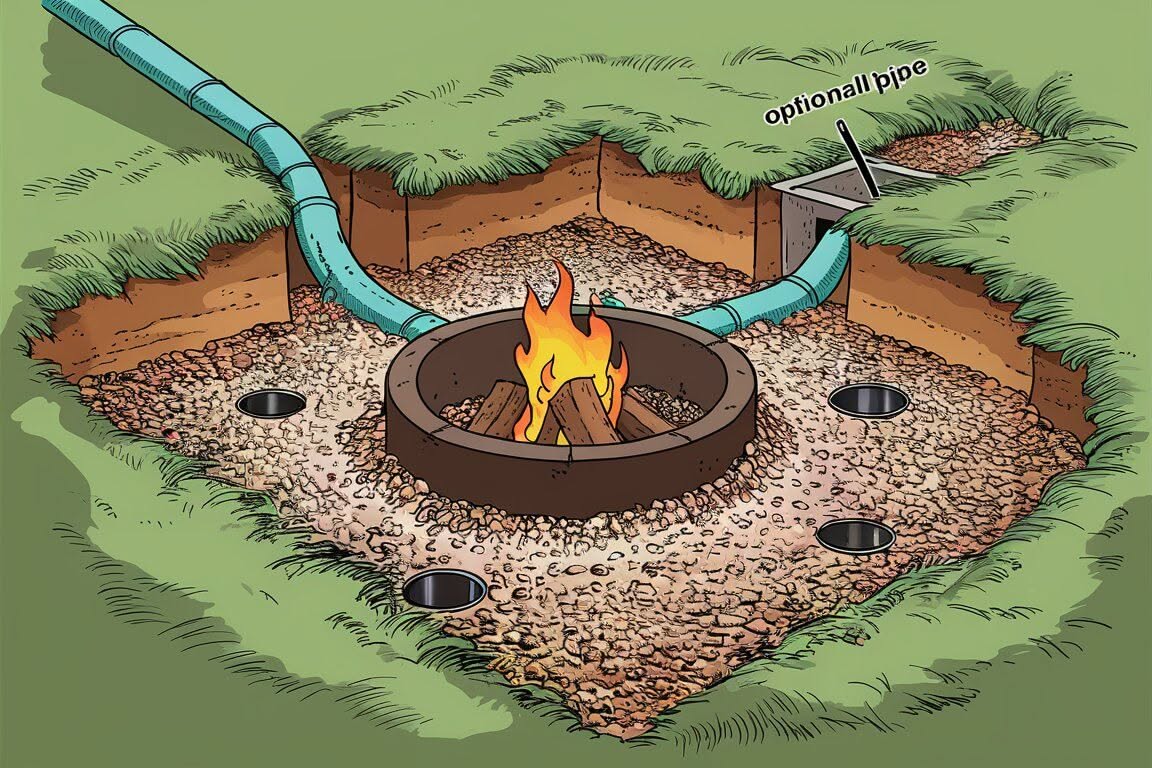
A clear bottom drain hole prevents standing water from rusting the firebox base.
Chart
Approximate heat retention after the fire dies down
STEEL BOWL, ~14 LB
30 to 45 minutes warm
CAST IRON, ~30 LB+
90 minutes or more
Heat retention scales with mass, not just material. A cast iron bowl at two to three times the weight of an equivalent steel bowl stores roughly proportionally more heat, and keeps radiating it long after an equivalent steel bowl has gone cold.
Cast iron vs steel, side by side
Factor
Steel
Cast iron
Weight
Lighter, more portable
Heavy, effectively fixed
Heat retention
Shorter, 30 to 45 min
Longer, 60 to 90+ min
Heat up speed
Faster
Slower to warm
Price
Generally lower
Generally higher
Rust behavior
Progressive if coating fails
Forms a protective patina
Brittleness
Flexes, resists cracking
Can crack if shocked while hot
Cast iron is also more brittle than steel, and can crack if cold rain hits a still hot casting. Steel flexes rather than fractures under the same stress, which is a real practical advantage for anyone who cannot always control the weather around a cooling fire.
Side by sideHow the five compare
Full comparison
Pit
Material
Size
Spark screen
Portability
Best for
Sunnydaze Bonfire
Steel
Large
Included
Moderate
Best overall
Pleasant Hearth Ring
Solid steel
28 in
Not included
Low, fixed use
Dedicated yard spot
Sunnydaze Cast Iron
Cast iron
30 in
Not included
Low, heavy
Heat retention
43 in Octagonal
Steel
43 in
Not included
Moderate
Large groups
Titan Ring
Heavy steel
40 in
Not included
High, collapsible
Camping and transport
Specifications are manufacturer reported and subject to change between production runs. Only the Sunnydaze Bonfire ships with a spark screen; budget one in separately for the other four, covered in our accessories guide.
None of these are smokeless
Every pit on this page is an open design without a double wall secondary combustion system, so expect the smoke behavior of a traditional campfire, shifting with wind, present throughout the burn rather than reduced in the middle of it. If reduced smoke matters more than open flame visibility, see our smokeless fire pits guide instead.
For most buyers, a large steel bowl like the Sunnydaze Large Bonfire pit balances price, capacity, and durability well. Buyers who want maximum heat retention after the fire dies down should look at cast iron instead, and anyone who needs to transport the pit between a campsite and home should consider a collapsible ring design.
How thick should fire pit steel be?
Look for at least 12 gauge steel, and thicker where the price allows it. Steel gauge numbers work in reverse: a lower number means thicker metal. A common budget failure point is steel in the 20 to 24 gauge range, which is thin enough to warp within a season or two of regular use.
Is cast iron or steel better for a fire pit?
Cast iron retains heat significantly longer after the fire dies down, thanks to its greater mass, and holds up well outdoors long term. Steel heats up faster and is considerably lighter, making it easier to move. Neither is objectively better; cast iron suits a fixed location where lingering warmth matters, while steel suits anyone who wants to reposition the pit.
Do open fire pits need a spark screen?
Yes, on any wood burning fire pit. Open bowls and rings have no engineered airflow system to control sparks the way some enclosed designs do, and burning wood pops and throws embers regardless of the pit's shape or material. A mesh spark screen is a low cost, essential safety addition.
Affiliate disclosure
FirePitSpot is a participant in the Amazon Services LLC Associates Program, an affiliate advertising program designed to provide a means for sites to earn advertising fees by advertising and linking to Amazon.com. As an Amazon Associate, we earn from qualifying purchases.
Links on this page are affiliate links. If you click one and make a purchase, we may receive a commission at no additional cost to you. This does not influence which products appear here or how they are ranked. Read our full affiliate disclosure.